
Author
Radclyffe Hall
- Lived
- Lived 1880 to 1943
- From
- From English
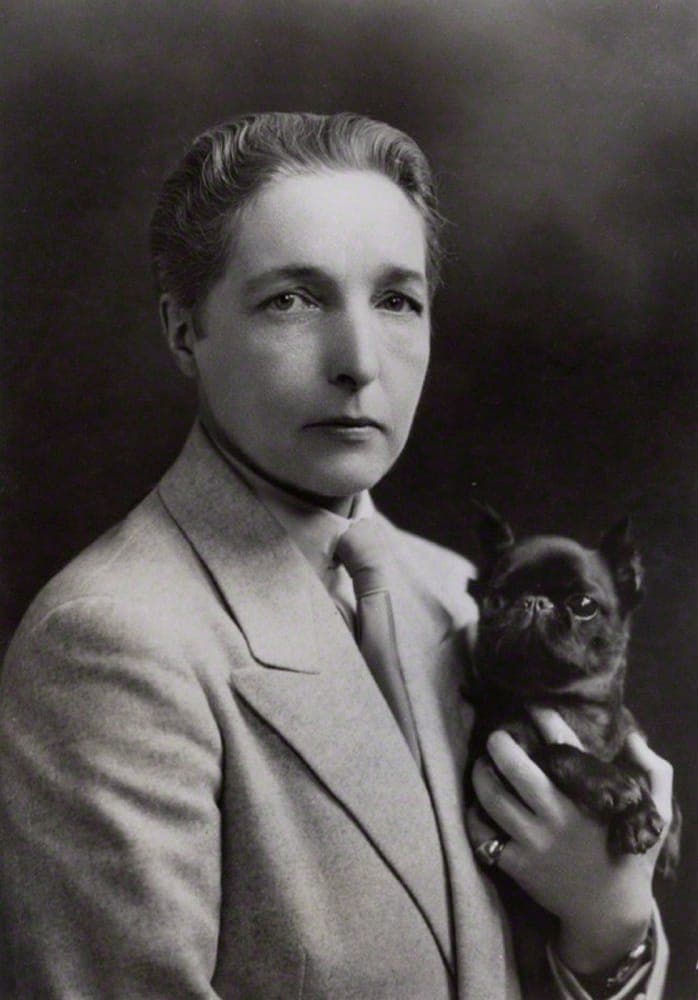
Born Marguerite Radclyffe Hall on August 12, 1880, in Bournemouth, England, she was the daughter of an unhappy marriage between a feckless heir and an American woman who neither wanted nor cherished her. Her father abandoned the family early, and she inherited his fortune as a young woman, which freed her from any need to earn a living. Friends called her John. She studied briefly at King's College London and in Germany, then drifted into a literary life through poetry, publishing five collections, several of which were set to music as popular songs. She turned to fiction in her forties. The Unlit Lamp (1924) and the comic Adam's Breed (1926), which won both the Prix Femina and the James Tait Black Memorial Prize, established her. Then came The Well of Loneliness (1928), the novel of Stephen Gordon, a woman who loves women, written as an open plea for tolerance. James Douglas of the Sunday Express declared he would rather give a healthy boy or girl a phial of prussic acid than this book. The Home Secretary moved against it, and a London magistrate ruled it obscene and ordered all copies destroyed, though it contained nothing more explicit than the line "and that night they were not divided." She lived openly with the sculptor Una Troubridge for decades. The trial made her name a byword and the novel an underground touchstone for generations of readers who saw themselves in Stephen. She died of colon cancer on October 7, 1943, at the age of sixty-three, in London, and was buried in Highgate Cemetery beside her former lover Mabel Batten.
The first button needs the app on this device; the second gets it there.
In the canon
- The Well of Loneliness1928