
Author
Ralph Ellison
- Lived
- Lived 1913 to 1994
- From
- From American
- Born in
- Born in Oklahoma City, Oklahoma
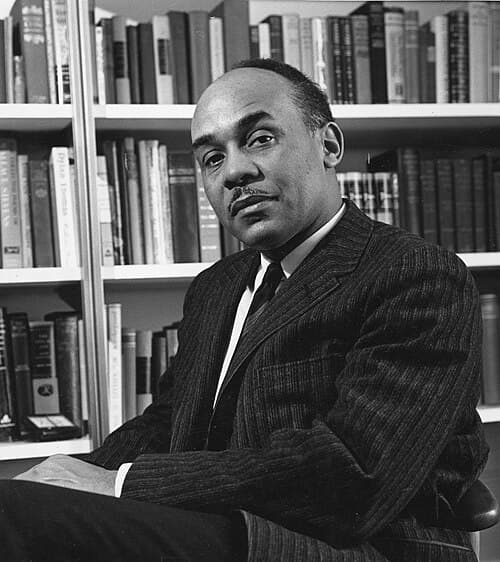
Born Ralph Waldo Ellison on March 1, 1913, in Oklahoma City, Oklahoma, named by his father, Lewis, after Ralph Waldo Emerson, in the hope that the boy might become a poet, Ellison grew up in a city that was barely a generation removed from the frontier. His father, an ice and coal dealer, died when Ralph was three; his mother, Ida, worked as a domestic servant and building custodian, bringing home discarded magazines and phonograph records from the white households where she cleaned. In 1933 he enrolled at the Tuskegee Institute in Alabama to study music, hoping to become a composer, but left after three years without a degree and traveled to New York, where he met Richard Wright and Langston Hughes. Wright encouraged him to write. After working on the Federal Writers' Project and serving in the Merchant Marine during the war, Ellison began the novel that would define his career. Invisible Man (1952), narrated by an unnamed Black man who declares himself invisible to American society, won the National Book Award in 1953, making Ellison the first African American to receive that honor. The novel drew on jazz, folklore, surrealism, and the traditions of Dostoevsky and Joyce. For the remaining four decades of his life, Ellison labored on a second novel. In 1967, a fire in his Plainfield, Massachusetts, home destroyed a substantial portion of the manuscript. He never finished it. The fragments were posthumously assembled and published as Juneteenth (1999). Ellison died of pancreatic cancer on April 16, 1994, in New York City, at eighty-one.
In the summer of 1945, on sick leave from the Merchant Marine, Ellison sat in a Vermont barn meaning to write a war novel about a captured American pilot in a Nazi POW camp. Instead, one line arrived unbidden: I am an invisible man. He spent the next seven years following it into the novel that made him famous.
The first button needs the app on this device; the second gets it there.
In the canon
- Richard Wright's Blues1945
- Invisible Man1952
- The Little Man at Chehaw Station1978
- Juneteenth1999