
Author
Rene Descartes
- Lived
- Lived 1596 to 1650
- From
- From French
- Born in
- Born in La Haye en Touraine, France
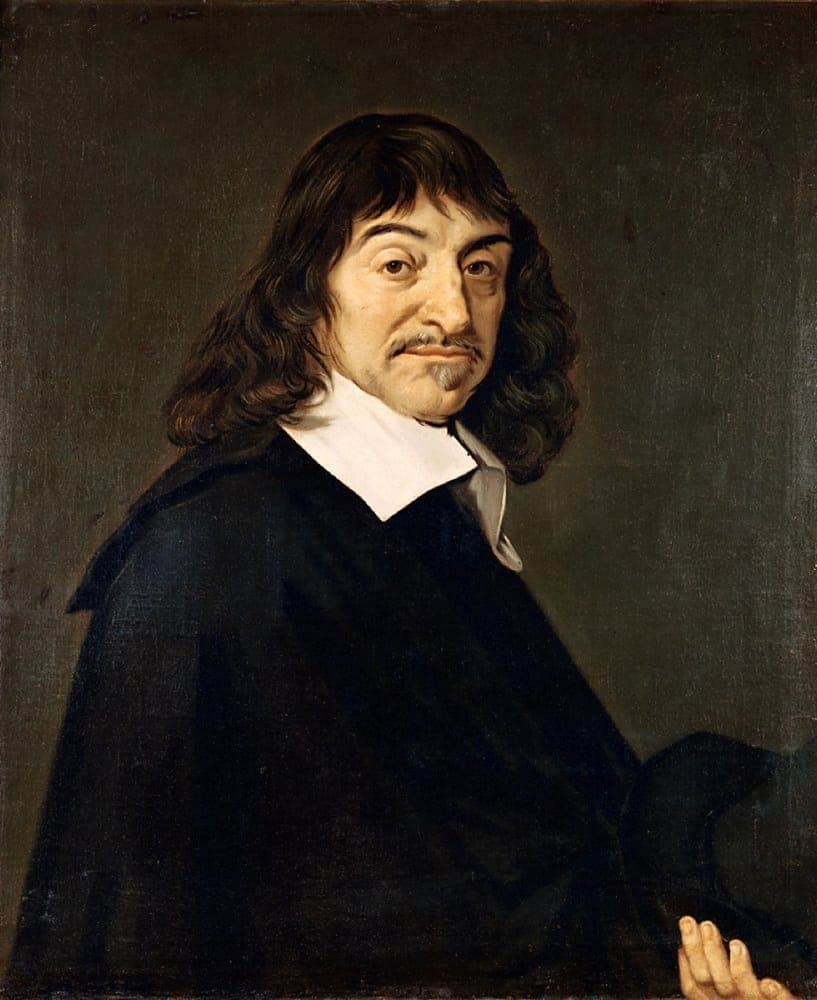
Born on March 31, 1596, in La Haye en Touraine, France, a town later renamed Descartes in his honor, he was the third surviving child of a councillor in the parliament of Brittany; his mother died when he was an infant, and his delicate health excused him from the early morning lessons at the Jesuit college of La Flèche, where he formed a lifelong habit of lying abed to think. He took a law degree at Poitiers in 1616, then enlisted as a gentleman soldier, and on a cold November night in 1619, quartered in a stove-heated room in Germany, he experienced three vivid dreams that he took as a divine summons to found a new universal science. He settled in the Dutch Republic, moving house some two dozen times to guard his solitude. Discourse on the Method (1637), written in plain French rather than scholarly Latin, carried his appendices on optics, meteorology, and geometry, and gave the world the sentence "Je pense, donc je suis," I think, therefore I am. Meditations on First Philosophy (1641) and Principles of Philosophy (1644) followed, alongside his coordinate geometry, which let algebra and shape speak to each other and still bears his name. He proposed that mind and body are distinct substances meeting at the pineal gland, a dualism argued over ever since. In 1649 Queen Christina summoned him to Stockholm and demanded lessons at five in the morning, a cruelty for a man who treasured warmth and late rising. The Swedish winter broke him. He died of pneumonia on February 11, 1650, at fifty-three; his bones were later carried back to France, though his skull vanished and resurfaced generations afterward.
On the night of 10 November 1619, Descartes shut himself inside an overheated room at Neuburg an der Donau, escaping a Bavarian winter as a soldier in Maximilian's army. He dreamed three times before dawn: a violent wind, a clap like thunder, a book that seemed to hold the whole of knowledge. He woke believing he had been shown a new science.
The first button needs the app on this device; the second gets it there.
In the canon
- Discourse on Method1637
- Meditations on First Philosophy1641