
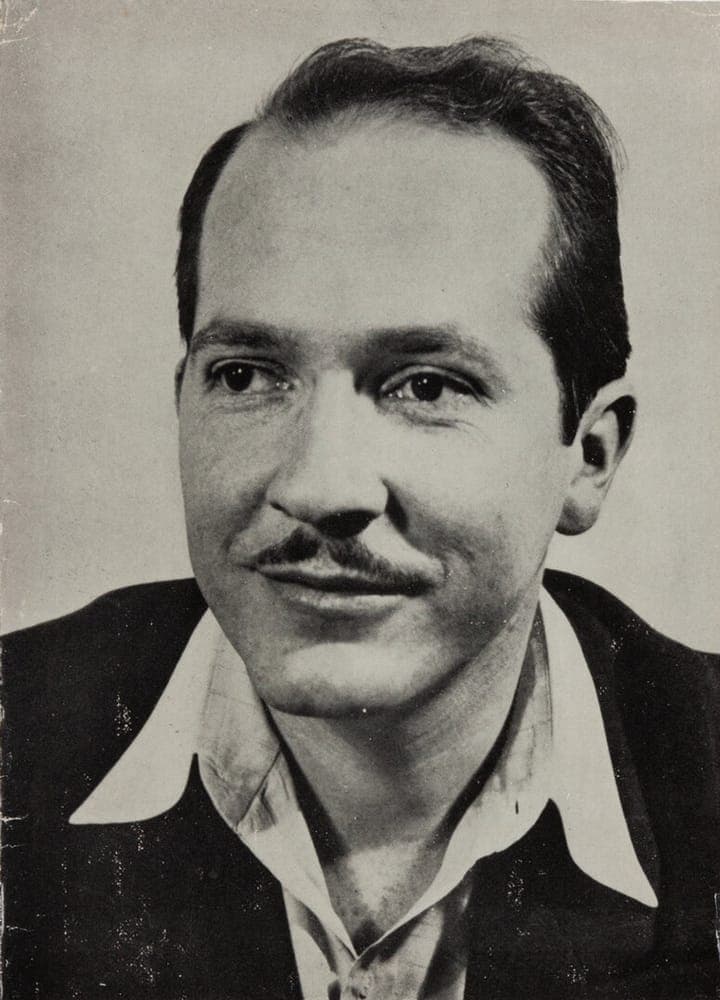
Author
Robert A. Heinlein
- Lived
- Lived 1907 to 1988
- From
- From American
Born Robert Anson Heinlein on 7 July 1907 in Butler, Missouri, the third of seven children of Rex Heinlein, an accountant, and Bam Lyle Heinlein, he grew up in Kansas City in what he called the Bible Belt, his interest in astronomy lit by the 1910 return of Halley's Comet. His family could not afford college; at sixteen he enlisted in the Missouri National Guard, then secured an appointment to Annapolis in 1925 with help from Senator James Reed and the Pendergast machine. He graduated in 1929, served as gunnery officer aboard the destroyer USS Roper and on the new aircraft carrier USS Lexington, and was discharged with tuberculosis in 1934. During hospitalisation he designed a working waterbed. He campaigned for Upton Sinclair's socialist EPIC movement, ran for the California State Assembly in 1938 and lost, and turned to writing to pay the mortgage. Life-Line sold to Astounding in 1939 and he became the central figure of Campbell's Golden Age. Stranger in a Strange Land (1961) brought him the counterculture audience and coined grok; Starship Troopers (1959) and The Moon Is a Harsh Mistress (1966) won Hugos; together with Asimov and Clarke he was named one of the Big Three of English science fiction and the first Grand Master of the Science Fiction Writers of America in 1974. His third wife, Virginia Gerstenfeld, a chemist and rocket test engineer, was the model for many of his fiercely competent female characters; she held a higher Navy rank than he did. He coined grok, waldo, and speculative fiction, terms now folded into ordinary English. He died at Carmel-by-the-Sea, California, on 8 May 1988, aged eighty, of heart failure and emphysema, and was buried at sea with full naval honours.
The first button needs the app on this device; the second gets it there.
In the canon
- The Unpleasant Profession Of Jonathan Hoag1942
- Starship Troopers1959
- Stranger in a Strange Land1961
- Glory Road1963
- The Moon is a Harsh Mistress1966