
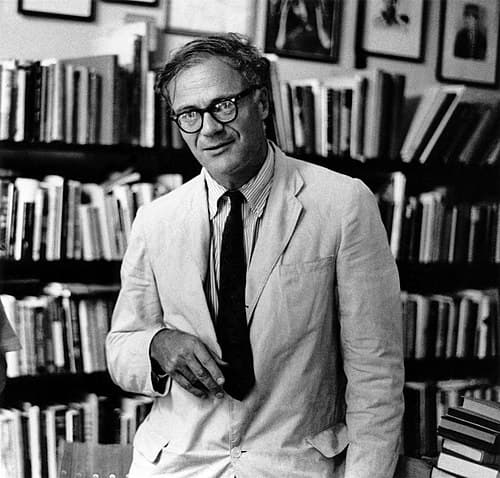
Author
Robert Lowell
- Lived
- Lived 1917 to 1977
- From
- From American
- Born in
- Born in Boston, Massachusetts
Born Robert Traill Spence Lowell IV on March 1, 1917, in Boston, into the patrician Lowell family, which counted among its members the poets Amy Lowell and James Russell Lowell and could trace its lineage to the Mayflower, Lowell grew up in a household defined by genteel decline and emotional coldness. He attended Harvard for two years before transferring to Kenyon College in Ohio to study under the poet and critic John Crowe Ransom. He converted to Roman Catholicism in 1940 and, during World War II, declared himself a conscientious objector, refusing military induction; he was sentenced to a year and a day in federal prison, serving five months. His first major collection, Lord Weary's Castle (1946), won the Pulitzer Prize when he was thirty. But it was Life Studies (1959), a devastating sequence of autobiographical poems about his family, his mental breakdowns, and his stays in psychiatric hospitals, that shattered the prevailing decorum of American poetry and inaugurated the confessional movement. Lowell suffered from severe bipolar disorder, enduring manic episodes that hospitalized him repeatedly and devastated those closest to him, including his second wife, the writer Elizabeth Hardwick. He was appointed Consultant in Poetry to the Library of Congress, won a second Pulitzer for The Dolphin (1973), and became the most publicly prominent American poet of his era, marching against the Vietnam War alongside Norman Mailer. On September 12, 1977, returning to New York in a taxi from JFK Airport, on his way to see Hardwick, clutching a Lucian Freud portrait of his third wife, Caroline Blackwood, Lowell suffered a fatal heart attack. He was sixty.
In the spring of 1959, Lowell taught a Boston University seminar attended by both Sylvia Plath and Anne Sexton, who sat side by side absorbing his loosened, autobiographical style. Neither had yet published the raw, personal poems that would soon make each of their names.
The first button needs the app on this device; the second gets it there.
In the canon
- The Quaker Graveyard in Nantucket1946
- Skunk Hour1959
- 91 Revere Street1959
- Beyond the Alps1959
- Memories of West Street and Lepke1959
- Man and Wife1959
- Waking in the Blue1959
- "To Speak of Woe That Is in Marriage"1959
- Epilogue1977