
Author
Samuel Beckett
- Lived
- Lived 1906 to 1989
- From
- From Irish
- Born in
- Born in Foxrock, Dublin
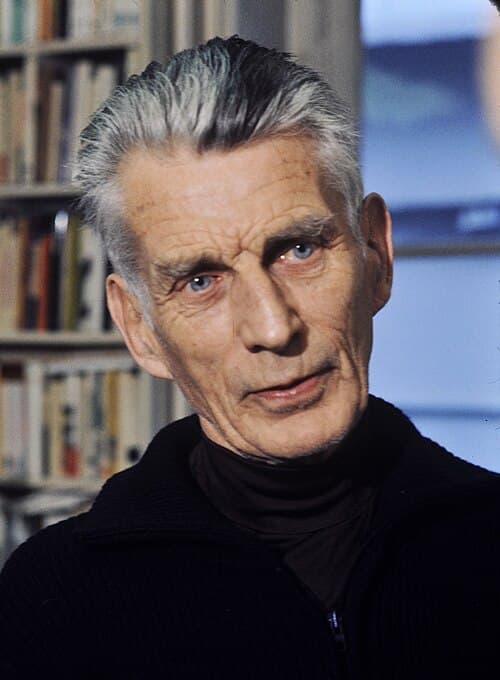
Born on April 13, 1906, Good Friday, as he liked to point out, in Foxrock, a prosperous suburb of Dublin, Samuel Barclay Beckett was the second son of a quantity surveyor and his devoutly religious wife. He studied French, Italian, and English at Trinity College Dublin, and in 1928 moved to Paris as an exchange lecturer at the Ecole Normale Superieure, where he became a close associate of James Joyce, serving as an informal secretary and research assistant. After wandering through Europe in the 1930s, he settled permanently in Paris in 1937. During the German occupation he joined the French Resistance cell Gloria SMH, for which he was later awarded the Croix de Guerre. He narrowly escaped a Gestapo roundup and hid for two years in the village of Roussillon. After the war he entered what he called "the siege in the room," an extraordinary burst of creativity in French that produced the trilogy of novels Molloy (1951), Malone Dies (1951), and The Unnamable (1953), as well as the play that made him famous, Waiting for Godot (1953), which premiered at the Theatre de Babylone in Paris. He won the Nobel Prize in Literature in 1969 and called it a "catastrophe," giving the prize money away. He died on December 22, 1989, in Paris, five months after his wife Suzanne, and was buried beside her in the Cimetiere du Montparnasse.
On a January night in 1938, a Paris pimp named Prudent stabbed Beckett in the chest, missing his heart by inches. At the preliminary hearing, Beckett asked why. 'I don't know, sir. I'm sorry,' the man said, and Beckett, charmed, dropped the charges. The publicity brought Suzanne Dechevaux-Dumesnil back into his life, and she never left it.
The first button needs the app on this device; the second gets it there.
In the canon
- Murphy1938
- Molloy1951
- Malone Dies1951
- Waiting for Godot1953
- The Unnamable1953
- Watt1953
- Endgame1957
- Krapp's Last Tape1958
- Happy Days1961