
Author
Sappho
- Lived
- Lived 630 BCE to 570 BCE
- From
- From Ancient Greek
- Born in
- Born in Lesbos, Greece
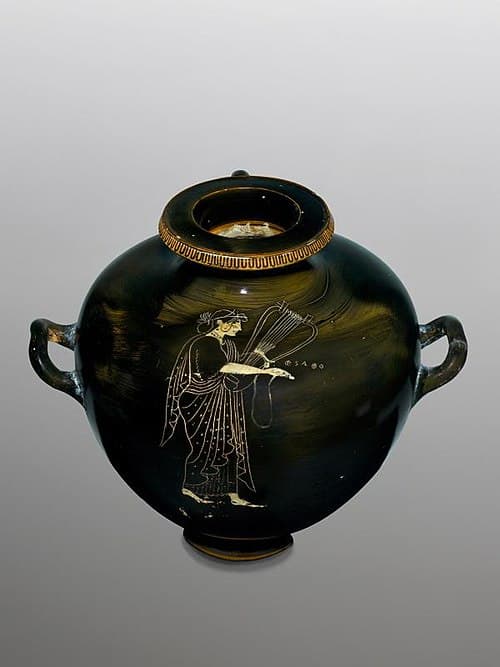
Born around 630 BC on the island of Lesbos in the Aegean Sea, Sappho was raised in an aristocratic family, though her parents' names remain uncertain across ancient sources. She appears to have had three brothers, Charaxos, Larichos, and Eurygios, and a daughter, traditionally named Cleis. At some point she was exiled to Sicily, likely for political reasons connected to her family's aristocratic standing, before returning to Lesbos. In antiquity she was regarded with a reverence that placed her alongside Homer: Plato called her the "Tenth Muse," and she was known simply as "The Poetess" just as Homer was "The Poet." She composed lyric poetry meant to be sung to the lyre, in the Aeolic dialect of her native island, and her subjects, desire, jealousy, beauty, the rituals of love and loss, were rendered with an intensity and directness that had no precedent. Of the nine volumes of her poetry that existed in the Library of Alexandria, almost nothing survives intact; only the Ode to Aphrodite is certainly complete. The rest exists in fragments, scraps of papyrus, quotations in the works of later grammarians, that read like messages recovered from a shipwreck. A new fragment, the Brothers Poem, was discovered on papyrus in 2014, two and a half millennia after it was written. She died around 570 BC. The later legend that she leapt from the Leucadian cliffs for love of a ferryman named Phaon is almost certainly a comic invention, but the island of Lesbos gave its name to an identity she helped define.
Her brother Charaxos sailed to Egypt to trade wine and there spent a fortune buying the freedom of a courtesan, Rhodopis. Herodotus records that Sappho answered him not with silence but with a poem, mocking his infatuation. Family quarrel became lyric, and the rebuke outlasted the ships and the fortune both.
The first button needs the app on this device; the second gets it there.
In the canon
- Fragment 31600 BCE
- Ode to Aphrodite (Fragment 1)569 BCE