
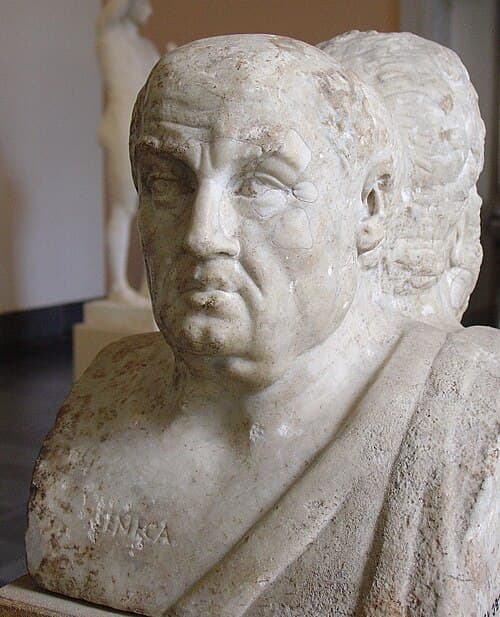
Author
Seneca
- Lived
- Lived 4 BCE to 65 CE
- From
- From Roman
- Born in
- Born in Cordoba, Spain
Born around 4 BC in Corduba (present-day Cordoba, Spain), Lucius Annaeus Seneca was the son of Seneca the Elder, a wealthy rhetorician, and the uncle of the poet Lucan. He was brought to Rome as a child and trained in rhetoric and Stoic philosophy, showing such brilliance that his early career in the Senate aroused the jealousy of Emperor Caligula. In AD 41, Emperor Claudius exiled him to Corsica on a charge of adultery with the emperor's niece, eight years of banishment during which he wrote consolatory essays that rank among the finest statements of Stoic thought. Recalled in 49 by Agrippina to tutor her young son Nero, Seneca became the most powerful man in Rome when his pupil ascended the throne in 54. Together with the prefect Burrus, he guided the empire through five years of competent rule. As Nero's behaviour grew increasingly erratic and murderous, Seneca's influence waned. He wrote the Moral Letters to Lucilius, 124 essays on how to live that remain the most accessible entry into Stoic philosophy. His tragedies, Medea, Phaedra, Thyestes, exercised an enormous influence on Renaissance drama, shaping Elizabethan revenge tragedy from Kyd to Shakespeare. In AD 65, implicated in the Pisonian conspiracy to assassinate Nero, possibly unjustly, he was ordered to kill himself. He opened his veins in a long, calm death that became one of the iconic scenes of antiquity, painted by Rubens and recounted by Tacitus.
Around 39 AD, Seneca argued a case in the Senate with such skill that Caligula, jealous of his eloquence, ordered his execution. One of the emperor's mistresses talked him out of it, arguing that Seneca's tuberculosis would kill him within months regardless. Caligula let the order lapse. Seneca lived another twenty-six years.
I have shown you ways of smoothing life; you prefer the glory of dying. I will not grudge you such a noble example.
The first button needs the app on this device; the second gets it there.
In the canon
- On the Shortness of Life49 CE
- On Anger49 CE
- Four Tragedies50 CE
- Six Tragedies54 CE
- On Clemency55 CE
- Thyestes62 CE
- Medea62 CE
- Letters to Lucilius65 CE
- Letters from a Stoic65 CE
- Letter 1: On Saving Time65 CE
- On Benefits65 CE
- Octavia68 CE