
Author
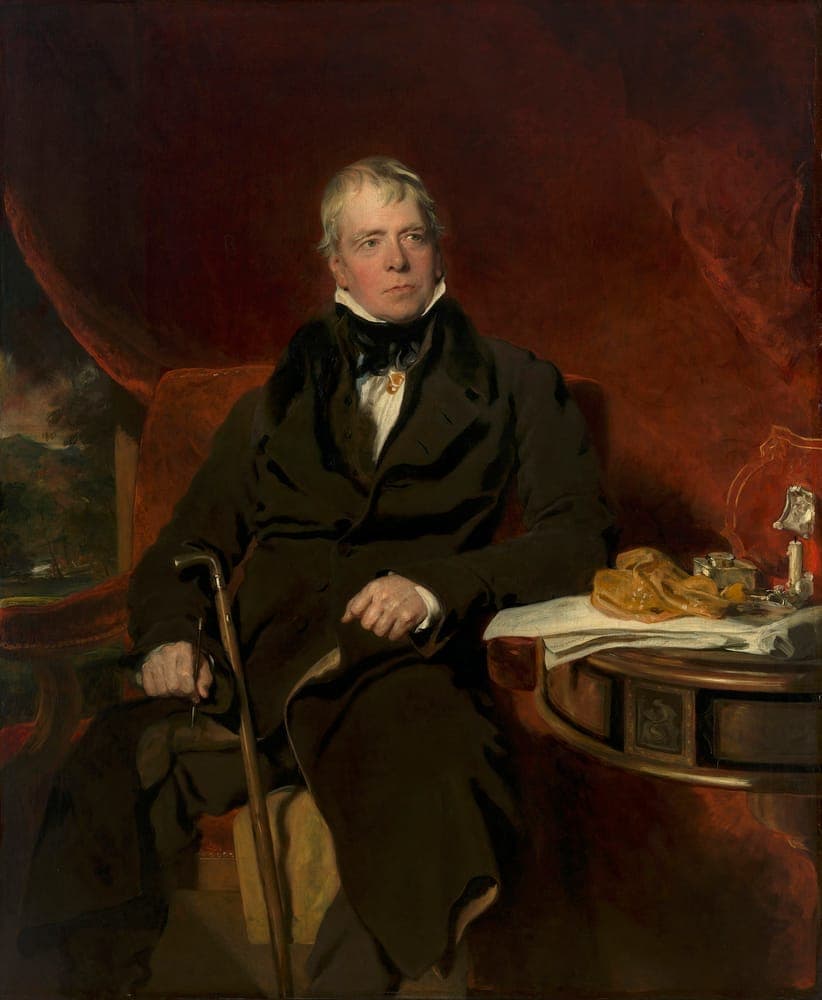
Sir Walter Scott
- Lived
- Lived 1771 to 1832
- From
- From Scottish
- Born in
- Born in Edinburgh, Scotland
Born on August 15, 1771, in a third-floor flat on College Wynd in Edinburgh's Old Town, the ninth of twelve children of a Writer to the Signet and Anne Rutherford, sister of the chemist Daniel Rutherford, he survived a bout of polio at eighteen months that left him lame for life. Sent to convalesce at his paternal grandparents' farm at Sandyknowe by the ruin of Smailholm Tower in the Borders, he absorbed there from his aunt Jenny the ballads, family histories, and Covenanter legends that would furnish his books. He studied at the Royal High School and the University of Edinburgh, qualified as an advocate in 1792, married Charlotte Charpentier in 1797 after three weeks' courtship, and served as Sheriff-Depute of Selkirkshire from 1799. His narrative poems, beginning with The Lay of the Last Minstrel (1805) and including Marmion (1808) and The Lady of the Lake (1810), made him the most popular poet in Europe until the appearance of Childe Harold's Pilgrimage. He turned to prose with Waverley (1814), published anonymously, and, in seventeen years, produced the run that effectively invented the historical novel: Guy Mannering (1815), Old Mortality (1816), Rob Roy (1817), The Heart of Midlothian (1818), Ivanhoe (1819), and Redgauntlet (1824). Made a baronet in 1820, he built the baronial fantasia of Abbotsford on the Tweed, filled it with antiquarian relics, and bankrupted himself when his publisher Constable failed in 1826; rather than declare insolvency, he wrote his way out, four million words in five years. The strain broke his health. He died on September 21, 1832, at Abbotsford, at the age of sixty-one, surrounded by his books and the sound of the river.
In 1826 Scott's publisher and printer collapsed, leaving him liable for about £130,000. He refused both bankruptcy and the King's offer of help, signed his estate over to trustees, and spent his last six years writing at a punishing pace to repay it.
The first button needs the app on this device; the second gets it there.
In the canon
- Waverley1814
- Old Mortality1816
- Rob Roy1817
- The Heart Of Midlothian1818
- Ivanhoe1819
- The Bride Of Lammermoor1819
- Redgauntlet1824