
Author
Stella Gibbons
- Lived
- Lived 1902 to 1989
- From
- From English
- Born in
- Born in Kentish Town, London
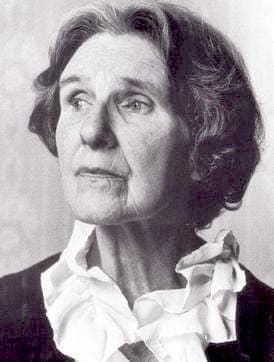
Born Stella Dorothea Gibbons on January 5, 1902, in Malden Crescent, Kentish Town, in a north London working-class neighborhood, she was the only daughter of Telford Gibbons, a charitable but violent London doctor, and Maude Williams, a stockbroker's daughter who held the household together. Telford was a drunk and a philanderer who alternately spoiled and mocked his daughter as she grew. Until she was thirteen Stella was taught at home by a procession of brief governesses, finding her way to writing through the family bookshelves. From 1915 she attended the North London Collegiate School, where she was a classmate of the future poet Stevie Smith. Her mother died suddenly in 1926; her father followed five months later of heart disease, leaving Gibbons the breadwinner for her two brothers. She took a diploma in journalism at University College London and worked for the British United Press and the London Evening Standard. Her first book was a poetry collection, The Mountain Beast (1930), and she always considered herself a poet rather than a novelist. Cold Comfort Farm (1932), a parody of the doom-laden rural novels of Mary Webb and Sheila Kaye-Smith, was written in evenings while she worked at The Lady; she marked her most overwritten passages with asterisks for the reader's amusement. It won the Prix Femina Étranger, infuriating Virginia Woolf, who had won the prize herself, and gave English the phrase something nasty in the woodshed. She wrote twenty-two further novels, none reaching the same audience, and grew to resent the book that defined her. She became a Fellow of the Royal Society of Literature in 1950. She died at home in Highgate on December 19, 1989, aged eighty-seven.
From the mid-1970s she held monthly literary tea parties at her home in Oakshott Avenue in Highgate. She was known to expel guests on the spot if they turned shrill, grew dramatic, or admitted to writing tragic novels. In her own drawing room, comedy was the house rule and doom-laden fiction was shown the door.
The first button needs the app on this device; the second gets it there.
In the canon
- Cold Comfort Farm1932