
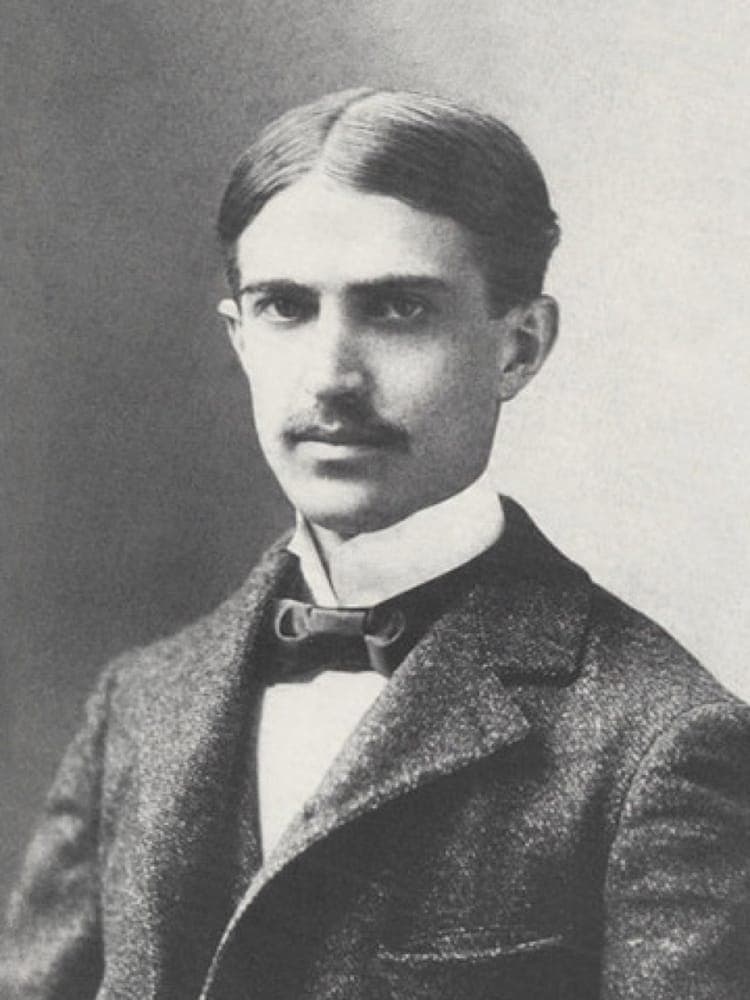
Author
Stephen Crane
- Lived
- Lived 1871 to 1900
- From
- From American
Born on November 1, 1871, in Newark, New Jersey, Stephen Crane was the fourteenth and last child of a Methodist minister and a mother active in the temperance movement. His father died when he was eight, and the boy drifted through several schools, excelling at baseball and little else, before leaving college after a single semester. He went to New York to work as a freelance journalist, living in poverty among the tenements of the Bowery, where he gathered the material for his first novel, Maggie: A Girl of the Streets (1893). Unable to find a publisher, he printed it himself under the pseudonym Johnston Smith and sold almost no copies. He was twenty-two when he wrote The Red Badge of Courage (1895), a novel of the American Civil War composed by a man who had never seen battle, drawing only on veterans' accounts and his own imagination. Its unflinching psychological realism made him famous on two continents. He published verse as well, the spare free-verse collections The Black Riders and Other Lines (1895) and War Is Kind (1899). Sent abroad as a war correspondent, he survived the sinking of a steamer off the coast of Florida, an ordeal of thirty hours in a dinghy that produced his story "The Open Boat" (1897). He covered the Greco-Turkish and Spanish-American wars, then settled in England with Cora Taylor, befriending Joseph Conrad and Henry James. Tuberculosis and the strain of overwork wore him down. He died on June 5, 1900, at a sanatorium in Badenweiler, Germany, on the edge of the Black Forest, twenty-eight years old, his debts unpaid and much of his best work behind him.
The first button needs the app on this device; the second gets it there.
In the canon
- Maggie: A Girl of the Streets1893
- The Red Badge of Courage1895