
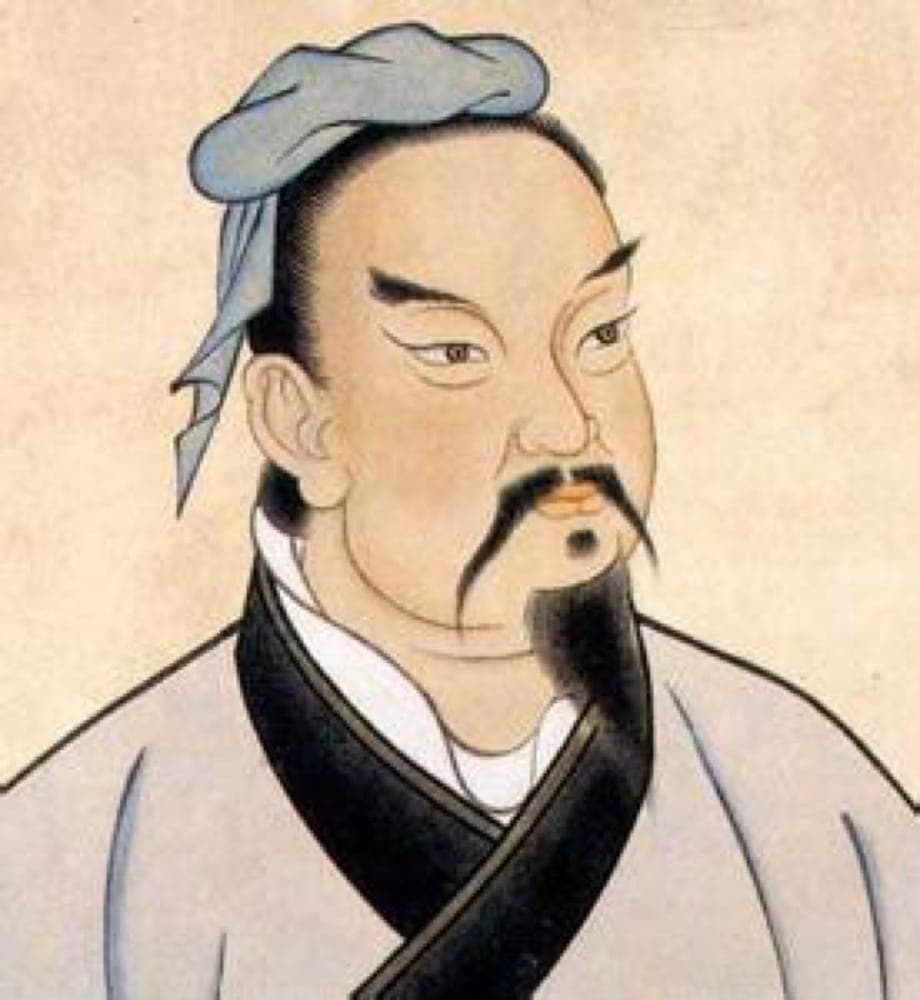
Author
Sun Tzu
- Lived
- Lived 544 BCE to 496 BCE
- From
- From Chinese
- Born in
- Born in State of Qi, China
Born, by tradition, around 544 BCE in the state of Qi during the late Spring and Autumn period of ancient China, Sun Tzu, whose given name was Sun Wu, remains a figure half in shadow, his life preserved chiefly through the account of the Han historian Sima Qian. The story holds that he fled the factional bloodshed of Qi and entered the service of King Helu of Wu, presenting the king with a treatise on warfare in thirteen chapters. To test its author, Helu ordered Sun Tzu to drill his harem of one hundred and eighty concubines as soldiers; when the women laughed instead of marching, Sun Tzu beheaded the king's two favorite commanders, after which the ranks obeyed in silence. He went on to lead the armies of Wu to victory against the larger state of Chu, capturing its capital around 506 BCE. The treatise that carries his name, The Art of War, is the oldest surviving study of strategy, built on the conviction that the supreme excellence is to subdue the enemy without fighting. Its aphorisms move from the marshaling of troops to the weather, the terrain, the use of spies, and the management of a general's own mind. Modern scholars dispute whether a single man named Sun Wu existed at all, and bamboo texts unearthed at Yinque Shan in 1972 deepened rather than settled the question. By tradition he died around 496 BCE, his place of death unrecorded, leaving behind a book that has been read by emperors, by Napoleon's officers, and by readers who never carried a sword.
According to Sima Qian's history, King Helu of Wu ordered Sun Tzu to drill his one hundred and eighty concubines as soldiers, to test his treatise on war. When the women laughed instead of marching, Sun Tzu beheaded the king's two favorite commanders leading them. The rest obeyed in silence.
The first button needs the app on this device; the second gets it there.
In the canon
- The Art of War500 BCE