
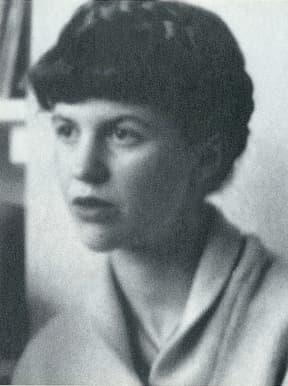
Author
Sylvia Plath
- Lived
- Lived 1932 to 1963
- From
- From American
- Born in
- Born in Jamaica Plain, Boston, Massachusetts
Born on October 27, 1932, in Jamaica Plain, Boston, Massachusetts, Sylvia Plath was the daughter of Otto Plath, a German-born entomologist and professor at Boston University who died of complications from diabetes when she was eight, a loss that became the central trauma of her poetry. She published her first poem at age eight and was relentlessly driven to succeed, winning a scholarship to Smith College, a Mademoiselle guest editorship in New York, and a Fulbright to Newnham College, Cambridge. In the summer of 1953, between her junior and senior years at Smith, she suffered a breakdown and attempted suicide by swallowing sleeping pills in a crawl space beneath her house, an experience she would transform into The Bell Jar (1963). At Cambridge she met the English poet Ted Hughes; they married in 1956 and had two children, Frieda and Nicholas. She took a creative writing seminar with Robert Lowell at Boston University in 1959, alongside Anne Sexton, gravitating toward the raw, personal mode that would be called confessional poetry. The marriage disintegrated after Hughes's affair with Assia Wevill. In the last months of her life, living alone with her children in a freezing London flat, she wrote the poems that would appear in Ariel (1965), works of furious, controlled brilliance composed at dawn before the children woke. She died by suicide on February 11, 1963, at thirty. The Collected Poems (1981) was awarded a posthumous Pulitzer Prize.
In December 1962 Plath signed the lease on 23 Fitzroy Road, a flat where W. B. Yeats had once lived, and took the blue plaque over the door as a blessing. She raced inside, opened Yeats's Collected Plays at random, and read: 'Get wine and food to give you strength and courage.' She thought his spirit was welcoming her.
The first button needs the app on this device; the second gets it there.
In the canon, 16 works
- Mirror1961
- The Bell Jar1963
- Daddy1965
- Morning Song1965
- The Applicant1965
- Lady Lazarus1965
- Tulips1965
- Cut1965
- Elm1965
- The Moon and the Yew Tree1965
- Fever 103°1965
- Poppies in October1965