
Author
Theodor Fontane
- Lived
- Lived 1819 to 1898
- From
- From German
- Born in
- Born in Neuruppin, Germany
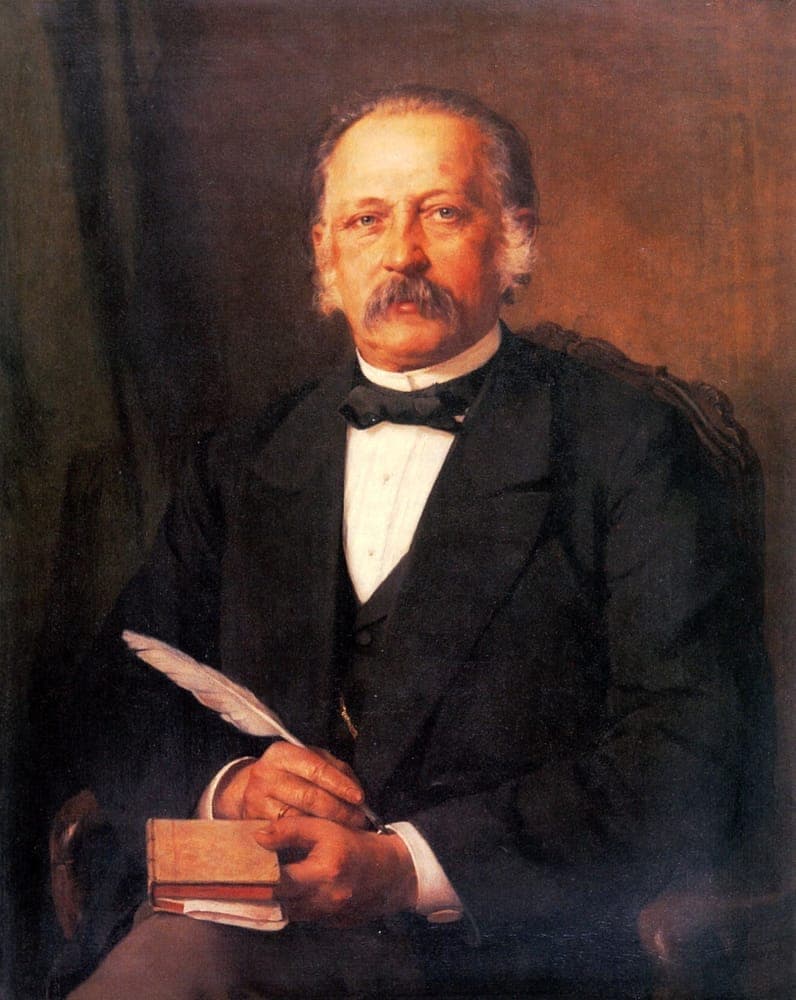
Born in Neuruppin on 30 December 1819, about thirty miles northwest of Berlin, Theodor Fontane came from a Huguenot family that had fled France after the revocation of the Edict of Nantes. His father was an apothecary with a weakness for gambling, and at sixteen Theodor was apprenticed to the same trade. He worked as a pharmacist in Dresden and then in his father's shop in the Oderbruch before fleeing the provinces for Berlin, where in 1843 he joined the literary club Tunnel uber der Spree alongside Theodor Storm and Gottfried Keller. After playing a small part in the revolutionary events of 1848 he became a journalist, spent several years as a Prussian government correspondent in London (a humiliation he summed up as having sold himself to the reaction for thirty pieces of silver a month), and on returning to Berlin walked the countryside of his native March of Brandenburg, producing five volumes of Wanderungen between 1862 and 1882. He turned to fiction at fifty-eight. Effi Briest (1894-95), the story of a young woman destroyed by a duel her husband fights years after her brief affair, became one of the central German realist novels; Frau Jenny Treibel, Irrungen Wirrungen, and his last novel Der Stechlin (1898) followed. Captured by the French at Vaucouleurs in 1870, he spent three months as a prisoner of war and afterward wrote that the mere glorification of the military without moral content or elevated aim was nauseating. Thomas Mann called him simply The Old Fontane and treated him as the master of the German social novel. He died in Berlin on 20 September 1898, aged seventy-eight, having worked until a few hours before the end.
In October 1870, touring the front as a war correspondent, Fontane wandered into French-held Domrémy to see Joan of Arc's birthplace. Franc-tireurs arrested him as a spy and sentenced him to death. He spent three months in captivity before Bismarck personally intervened to secure his release.
The first button needs the app on this device; the second gets it there.
In the canon
- Schach Von Wuthenow1883
- Effi Briest1895
- The Stechlin1898