
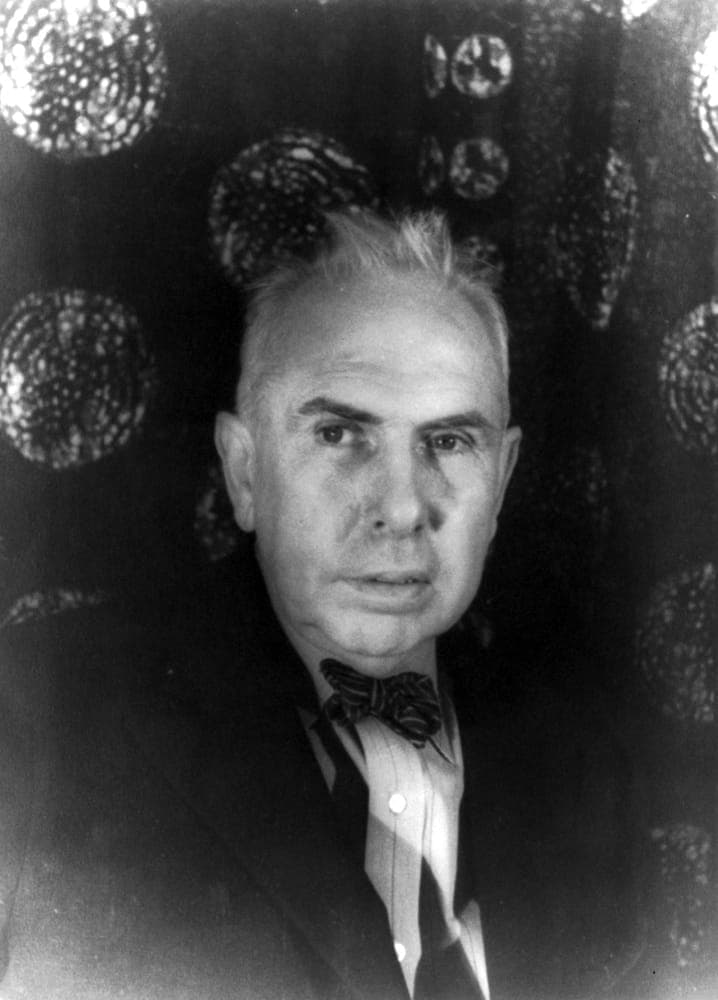
Author
Theodore Dreiser
- Lived
- Lived 1871 to 1945
- From
- From American
- Born in
- Born in Terre Haute, Indiana
Born Theodore Herman Albert Dreiser on August 27, 1871, in Terre Haute, Indiana, the twelfth of thirteen children of a German immigrant Catholic from Mayen on the Rhine and a Mennonite mother from Ohio whose family had disowned her for the conversion, he was raised in such poverty that his shoes were stuffed with newspaper through the Indiana winters. His older brother Paul changed his name to Dresser and became a hit songwriter, paying for Theodore's brief year at Indiana University. The boy left for Chicago at sixteen, drifted into newspaper work in St. Louis, Toledo, and Pittsburgh, and arrived in New York in 1894 to edit magazines while teaching himself the novel by studying Balzac and Hardy. Sister Carrie (1900), the story of a country girl who walks out of an Indiana train station into Chicago and rises by a series of liaisons to electric-lit fame, was suppressed almost on publication by the wife of his publisher Frank Doubleday, who found it immoral; barely a thousand copies sold. He suffered a nervous collapse, contemplated suicide, recovered, and twenty years later vindicated the book with An American Tragedy (1925), a thousand-page novel built around the murder of Grace Brown by Chester Gillette on Big Moose Lake in 1906. It earned him a fortune and a lawsuit. The naturalist heaviness of his prose was mocked by H. L. Mencken even as Mencken defended his right to publish; T. S. Eliot called him America's Zola. He moved through socialism to the Communist Party, applied for membership weeks before his death, and died of a heart attack in Hollywood on December 28, 1945, at seventy-four.
In 1903, crushed by Sister Carrie's failure, Dreiser spent his last dollar on food and prepared to sleep on the streets. His brother found him and got him into a sanatorium. Two months later, still shaken, he took a labourer's job with the New York Central Railroad, an ordeal he recorded in An Amateur Laborer.
The first button needs the app on this device; the second gets it there.
In the canon
- Sister Carrie1900
- An American Tragedy1925