
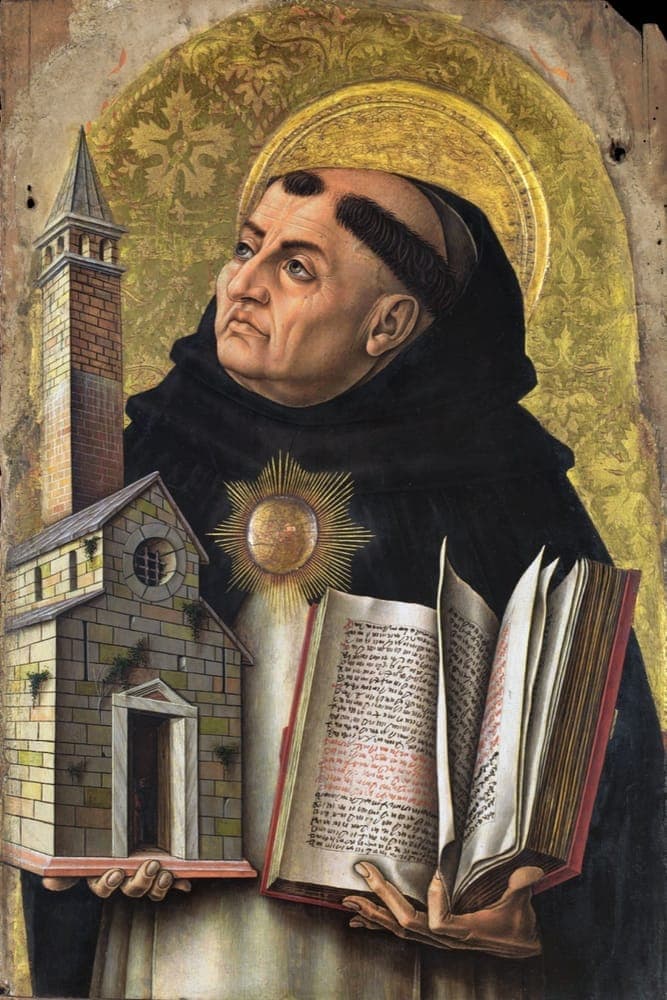
Author
Thomas Aquinas
- Lived
- Lived 1225 to 1274
- From
- From Italian
Born around 1225 in the castle of Roccasecca, near Aquino in the Kingdom of Sicily, Thomas came from the counts of Aquino, a family of minor nobility who expected him to rise within the Church as a Benedictine abbot. Sent at five to the abbey of Monte Cassino, he later studied at the University of Naples, where he encountered the newly recovered works of Aristotle and the Dominican friars. His decision to join the mendicant Dominicans appalled his family, who held him captive at home for nearly a year to break his resolve. He studied at Paris and Cologne under Albert the Great, who reportedly answered the mockery of fellow students, who called the heavy, silent young man a dumb ox, by predicting his bellowing would be heard across the world. He taught at Paris and in the courts of Italy, laboring to reconcile Aristotelian philosophy with Christian revelation. His major writings include the Summa contra Gentiles (1259-1265), the unfinished Summa Theologica (1265-1274), and commentaries on Aristotle and on Scripture, along with the Eucharistic hymns Pange Lingua and Adoro te devote. He was a large, abstracted man who once continued dictating through a royal banquet. On December 6, 1273, after a mystical experience during Mass at Naples, he set down his pen and wrote no more, calling all he had written so much straw. He died on March 7, 1274, at the Cistercian abbey of Fossanova, while traveling to a Church council, around the age of forty-nine. He was canonized in 1323.
The first button needs the app on this device; the second gets it there.
In the canon
- On Being And Essence1256
- Summa Theologica1274