
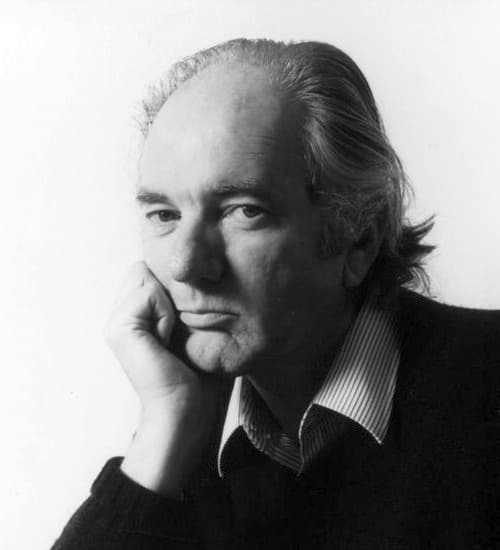
Author
Thomas Bernhard
- Lived
- Lived 1931 to 1989
- From
- From Austrian
- Born in
- Born in Heerlen, Netherlands
Born Nicolaas Thomas Bernhard on February 9, 1931, in Heerlen, the Netherlands , where his unwed Austrian mother had gone to conceal the pregnancy , he was raised largely by his maternal grandfather, the novelist Johannes Freumbichler, in Seekirchen and Salzburg. Freumbichler introduced the boy to literature and philosophy, becoming the only adult Bernhard would ever speak of with tenderness. His childhood was a catalog of institutional misery: Nazi-era boarding schools, a Catholic dormitory he loathed, and the city of Salzburg, which he would spend his career excoriating. At eighteen he contracted pleurisy, then tuberculosis, spending years in sanatoriums where he began to write and where he met Hedwig Stavianicek, a woman thirty-seven years his senior who became his lifelong companion and patron. His early novels , Frost (1963), Gargoyles (1967), The Lime Works (1970) , established a style of obsessive, breathless monologue in which isolated protagonists spiral into philosophical rage. Correction (1975), inspired by the life of Ludwig Wittgenstein, is often considered his masterpiece. His autobiographical quintet (1975–1982) recounted his childhood with lacerating precision. His plays, including The World-Fixer (1979) and Heldenplatz (1988), provoked scandals in Austria, the latter causing a parliamentary uproar for its suggestion that Vienna remained deeply antisemitic. His final will forbade the publication or performance of any of his works within Austria’s borders , a last act of fury against the country that had formed and tormented him. He died on February 12, 1989, in Gmunden, Upper Austria, three days after his fifty-eighth birthday.
He wanted to be an opera singer. From 1955 he trained in voice and acting at Salzburg's Mozarteum, taking private singing lessons on the side. But the lungs that pleurisy and tuberculosis had wrecked in his teens would never carry an aria. He gave the breath to prose instead, in monologues that run on without pause.
The first button needs the app on this device; the second gets it there.
In the canon
- Frost1963
- Correction1975
- Concrete1982
- Wittgenstein's Nephew1982
- The Loser1983
- Woodcutters1984
- Old Masters1985
- Extinction1986