
Author
Thomas More
- Lived
- Lived 1478 to 1535
- From
- From English
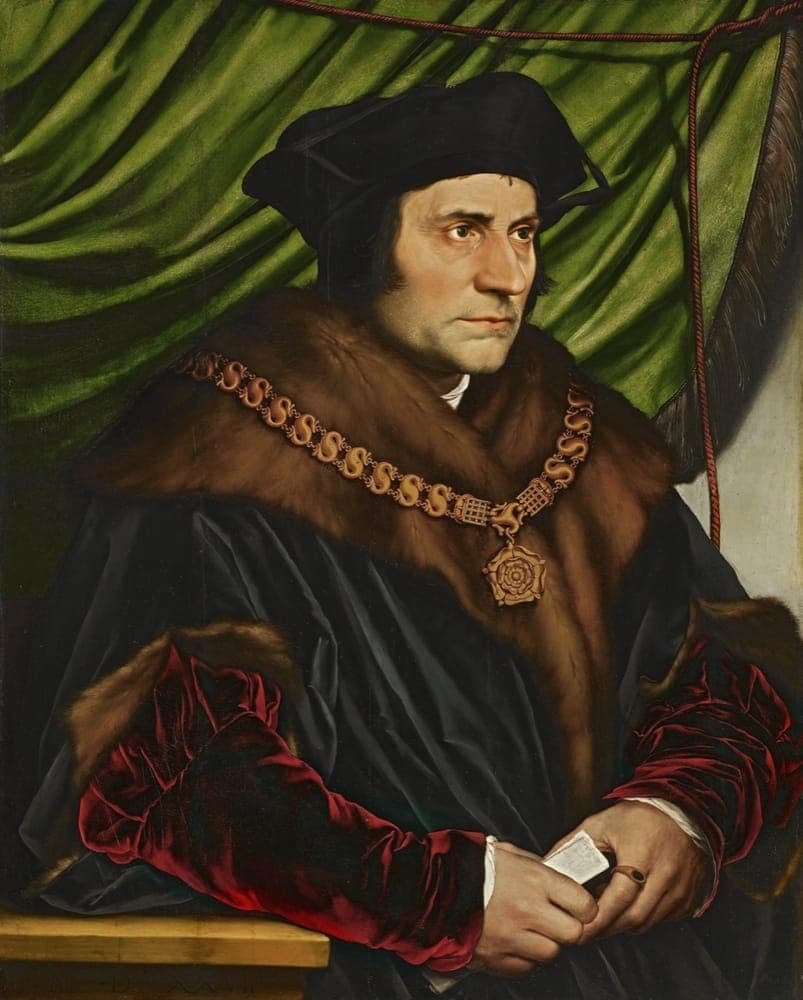
Born on February 7, 1478, in Milk Street, London, the son of Sir John More, a successful lawyer and later a judge, Thomas More was sent as a boy to serve as a page in the household of Cardinal John Morton, who predicted he would prove a marvelous man. He studied at Oxford, learning Greek and the new humanist letters, then trained in law at New Inn and Lincoln's Inn, but for a time lived near the Carthusian monks of the Charterhouse, weighing a monastic vocation before choosing marriage and public life. He entered Parliament in 1504 and rose steadily under Henry VIII, serving as a diplomat, then as Speaker of the Commons, and in 1529 as Lord Chancellor, the first layman to hold the office. He wrote Utopia (1516) in Latin, an account of an imagined island commonwealth that gave a word to the language, and his fierce polemics against William Tyndale and the early Reformers ran to many volumes. A devout and learned friend of Erasmus, who dedicated In Praise of Folly to him, he wore a hair shirt beneath his robes and kept a famously merry household at Chelsea, where he educated his daughters in the classics alongside his sons. When Henry broke with Rome and declared himself head of the Church in England, More resigned the chancellorship in 1532 and refused to swear the Oath of Supremacy. He was imprisoned in the Tower of London, tried for treason on the testimony of Richard Rich, and convicted. He was beheaded on July 6, 1535, at the age of fifty-seven, declaring himself the king's good servant, but God's first. The Catholic Church canonized him in 1935.
The first button needs the app on this device; the second gets it there.
In the canon
- Utopia1516
- Epigrammata1518