
Author
Virgil
- Lived
- Lived 70 BCE to 19 BCE
- From
- From Roman
- Born in
- Born in Near Mantua, Italy
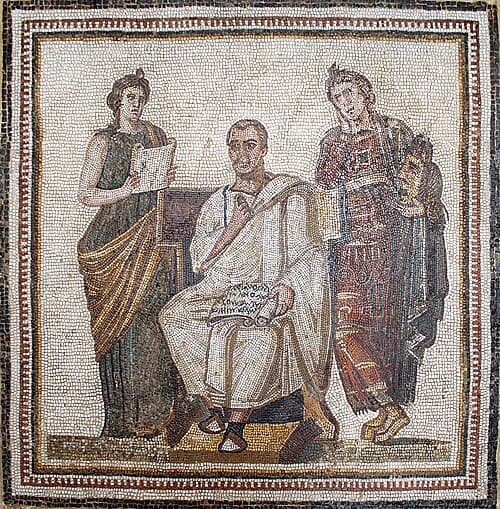
Born Publius Vergilius Maro on October 15, 70 BCE, near Mantua in Cisalpine Gaul , a region that was not yet fully Roman and whose Celtic heritage lingered in local speech , Virgil grew up on a farm that would be confiscated during the civil wars following Julius Caesar’s assassination, an early experience of dispossession that haunts his poetry. He studied rhetoric and philosophy in Cremona, Milan, and Rome, and may have attended the Epicurean school of Siro in Naples. His first major work, the Eclogues (42–39 BCE), a cycle of ten pastoral poems indebted to the Greek poet Theocritus, attracted the patronage of Maecenas and, through him, the attention of Octavian, the future Augustus. The Georgics (29 BCE), a didactic poem on farming in four books, transformed agricultural instruction into some of the most luminous verse ever composed in Latin, moving from beekeeping to the myth of Orpheus with seamless grandeur. He spent the last eleven years of his life composing the Aeneid, an epic in twelve books tracing the journey of Aeneas from the ruins of Troy to the founding of Rome, a work that rivaled Homer in scope and ambition while infusing the epic tradition with a profound sense of loss, duty, and the human cost of empire. Dissatisfied with the poem and having left instructions for it to be burned, Virgil fell ill during a trip to Greece and died on September 21, 19 BCE, in Brindisi. Augustus overruled the poet’s dying wish and ordered the Aeneid published. It became the central text of Latin education for two millennia, and Dante chose Virgil as his guide through Hell and Purgatory in the Divine Comedy , the highest tribute one poet has ever paid another.
Reading the unfinished Aeneid aloud to Augustus, Virgil reached Book Six and the young dead prince Marcellus, the emperor's own nephew, so lately buried. As the line came, 'you shall be Marcellus,' the boy's mother Octavia fainted in her grief. Virgil stopped. The scene was too true to bear.
Mantua gave me birth, Calabria snatched me away; now Naples holds me. I sang of pastures, of farms, of leaders.
The first button needs the app on this device; the second gets it there.
In the canon
- Eclogue IV (the Messianic Eclogue)40 BCE
- The Aeneid19 BCE
- Georgics29 CE