
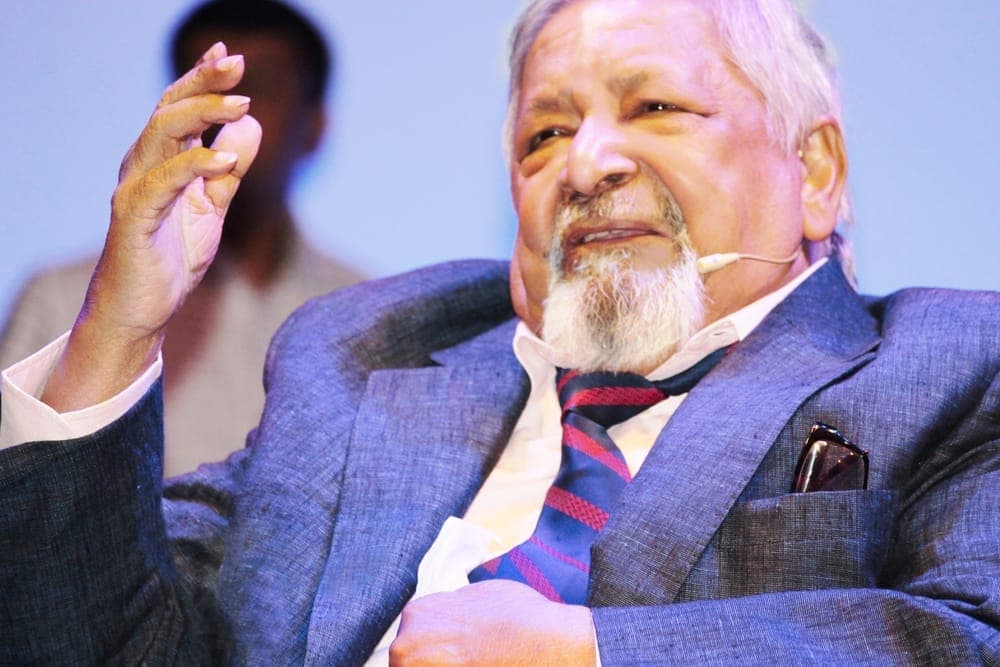
Author
V.S. Naipaul
- Lived
- Lived 1932 to 2018
- From
- From British-Trinidadian
- Born in
- Born in Chaguanas, Trinidad
Born Vidiadhar Surajprasad Naipaul on August 17, 1932, in the sugar plantation town of Chaguanas, Trinidad, the second child and first son of a Brahmin family whose grandfathers had come from India as indentured labourers, he was raised in the bookish atmosphere of his father Seepersad, a Trinidad Guardian reporter whose own short stories shaped his son's calling. The family moved to Port of Spain when he was seven. He attended Queen's Royal College and at seventeen won a government scholarship that took him to University College, Oxford, in 1950, where he read English and met Patricia Hale, who became his first wife. He suffered something close to a nervous breakdown at Oxford and only slowly began to publish. The Mystic Masseur (1957), Miguel Street (1959), and A House for Mr Biswas (1961), the great novel based on his father's life, established him. He travelled obsessively, producing non-fiction studies of the post-colonial world that often inflamed their subjects, among them The Middle Passage (1962) on the Caribbean, An Area of Darkness (1964) on India, and Among the Believers (1981) on the Islamic world. In a Free State won the Booker Prize in 1971. A Bend in the River (1979) and The Enigma of Arrival (1987), set in his cottage on Sir Stephen Tennant's Wiltshire estate, are widely thought his finest works. He was knighted in 1990 and given the Nobel Prize in Literature in 2001, the academy citing his "scrutiny of suppressed histories." His views on women, Islam, and Africa drew lasting controversy, and Paul Theroux's memoir Sir Vidia's Shadow chronicled their thirty-year friendship's collapse. He died on August 11, 2018, at his London home, six days before his eighty-sixth birthday.
In the spring of 1952, alone and uncertain at Oxford, Naipaul took an impulsive trip to Spain and spent everything he had saved. He came back unable to write, calling it a nervous breakdown. Patricia Hale, a history student he had met at a college play, stayed close and helped him recover enough to write again.
The first button needs the app on this device; the second gets it there.
In the canon
- A House for Mr. Biswas1961
- In a Free State1971
- A Bend in the River1979
- The Enigma of Arrival1987