
Author
Vyasa
- From
- From Indian
- Born in
- Born in An island in the Yamuna River, India
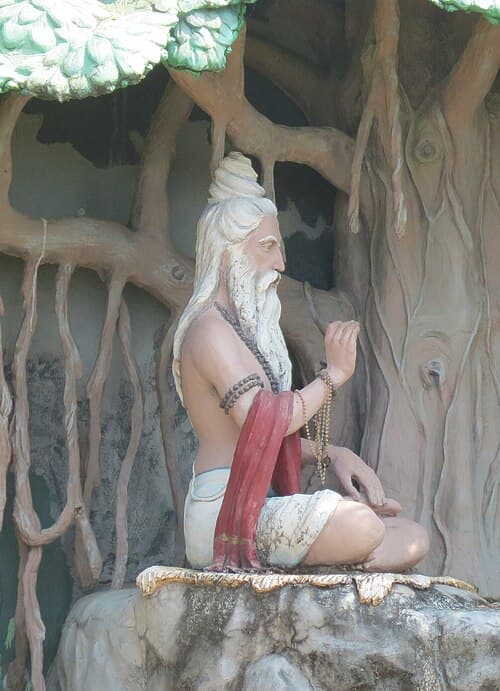
The sage Vyasa , whose name in Sanskrit means “compiler” or “arranger” , stands at the mythic headwaters of Indian literature as its foundational author, a figure whose attributed works encompass virtually the entire scriptural and epic tradition of Hinduism. Also known as Krishna Dvaipayana (“the dark one born on an island”), he is said to have been born on an island in the Yamuna River, the son of the sage Parashara and the fisherwoman Satyavati, his skin dark from birth. According to tradition, he divided the single Veda into four texts , the Rigveda, Samaveda, Yajurveda, and Atharvaveda , earning the title Veda Vyasa, “the splitter of the Vedas,” an act of literary organization so vast that it is credited with making the sacred hymns accessible to humanity. He is traditionally regarded as the author of the eighteen Puranas and the Brahma Sutras, foundational texts of Hindu philosophy. His supreme achievement is the Mahabharata, the longest epic poem in world literature at roughly 1.8 million words , seven times the combined length of the Iliad and the Odyssey , a work that contains within it the Bhagavad Gita, one of the most influential spiritual texts ever composed. Vyasa appears as a character within his own epic, intervening at critical moments and fathering the patriarchs whose descendants wage the great war at Kurukshetra. Hindu tradition regards him as a partial incarnation of Vishnu and one of the seven Chiranjivis , immortals who are said to still walk the earth in the present age, the Kali Yuga. The festival of Guru Purnima is celebrated in his honor each year, acknowledging him as the original guru from whom all teaching descends.
Legend holds that when Vyasa set out to recite the Mahabharata, only Ganesha could write fast enough to keep pace, on one condition: Vyasa could never pause. Vyasa answered by composing verses so tightly wound that Ganesha had to stop and puzzle them out. When Ganesha's pen finally broke, he snapped off his own tusk and kept writing.
The first button needs the app on this device; the second gets it there.
In the canon
- Mahabharata400 BCE
- The Bhagavad Gita200 BCE
- Bhagavata Purana900 CE