
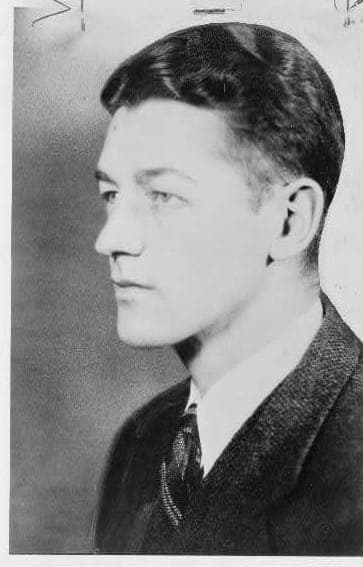
Author
Wallace Stegner
- Lived
- Lived 1909 to 1993
- From
- From American
- Born in
- Born in Lake Mills, Iowa
Born Wallace Earle Stegner on 18 February 1909 in Lake Mills, Iowa, he spent a rootless childhood trailing his father, a restless schemer chasing one get-rich scheme after another, across North Dakota, Washington, and Montana before the family settled for six years on a homestead near Eastend, Saskatchewan, and later in Great Falls, Montana, and Salt Lake City, Utah. He earned a bachelor's degree from the University of Utah in 1930 and a master's and doctorate from the University of Iowa, studying under the critic Norman Foerster, who later became the model for the retired scholar narrating Angle of Repose. He taught at the University of Wisconsin and then Harvard, where he formed a lasting friendship with the historian Bernard DeVoto, who steered him toward environmental advocacy. The Big Rock Candy Mountain (1943), a novel drawn from his own itinerant boyhood and his father's failures, established him as a major American voice. In 1946 he founded the creative writing program at Stanford University, where he taught until 1971 and shaped a generation of writers including Wendell Berry, Ken Kesey, Raymond Carver, Edward Abbey, and a young Sandra Day O'Connor. His 1960 Wilderness Letter, written for a federal report on public lands, helped lay the groundwork for the Wilderness Act of 1964 and gave American conservation its most quoted phrase, 'the geography of hope.' Angle of Repose (1971), a novel built from the letters of a nineteenth-century frontier wife, won the Pulitzer Prize in 1972, and The Spectator Bird (1976) won the National Book Award in 1977. He married Mary Stuart Page in 1934, and they had one son, Page. Stegner died on 13 April 1993 at a hospital in Santa Fe, New Mexico, aged eighty-four, from injuries suffered in a car accident two and a half weeks earlier.
In 1960, asked to help prepare a federal wilderness report, Stegner wrote a single letter in an afternoon, arguing that untouched land mattered even to those who would never set foot in it. Interior Secretary Stewart Udall read it aloud at a conference, replacing his own prepared speech, and its closing phrase, 'the geography of hope,' entered the language.
The first button needs the app on this device; the second gets it there.
In the canon
- Wolf Willow1962
- All The Little Live Things1967
- Angle of Repose1971
- The Spectator Bird1976
- American Places1981