
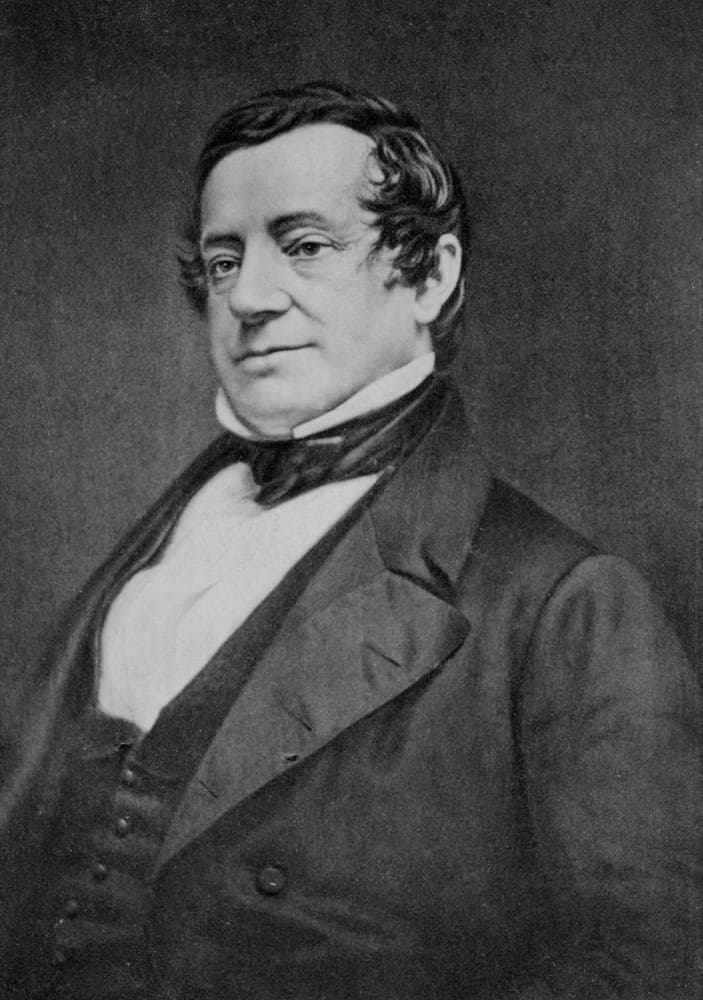
Author
Washington Irving
- Lived
- Lived 1783 to 1859
- From
- From American
Born on April 3, 1783, in New York City, the youngest of eleven children of a Scottish merchant father and an English mother, Washington Irving was named for the general who had just won the war for independence. Frail and restless as a boy, he avoided the disciplined schooling of his elder brothers, read what he pleased, and drifted into the study of law without ever loving it. His first literary venture was a series of satirical essays signed "Jonathan Oldstyle," followed by Salmagundi (1807-1808), a comic miscellany written with his brother and a friend. A History of New York (1809), narrated by the invented Dutch antiquary Diedrich Knickerbocker, made his reputation and gave the city's old families a nickname. After the family business failed, he sailed for Europe and stayed seventeen years. The Sketch Book of Geoffrey Crayon, Gent. (1819-1820), composed in England, gathered the genial essays and two tales that would outlast everything else he wrote, "Rip Van Winkle" and "The Legend of Sleepy Hollow." It was the first American book to win a wide and lasting English readership. He went on to write Bracebridge Hall (1822), Tales of a Traveller (1824), and a sympathetic Life of Mahomet, and served four years as American minister to Spain, where his fascination with Granada produced Tales of the Alhambra (1832). His final labor was a five-volume Life of George Washington (1855-1859). He died on November 28, 1859, at Sunnyside, his much-loved cottage on the Hudson at Tarrytown, hours after telling his niece he was ready for the night to come, at the age of seventy-six.
The first button needs the app on this device; the second gets it there.
In the canon
- A History of New York1809
- Rip Van Winkle1819
- The Sketch Book of Geoffrey Crayon, Gent.1819
- The Legend of Sleepy Hollow1820
- The Devil and Tom Walker1824