
Author
W.H. Auden
- Lived
- Lived 1907 to 1973
- From
- From English-American
- Born in
- Born in York, England
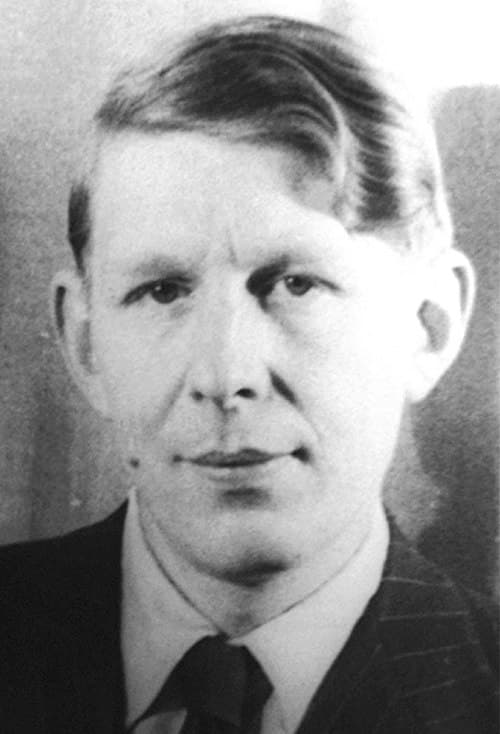
Born Wystan Hugh Auden on February 21, 1907, in York, England, the third son of a physician father and a devoutly Anglo-Catholic mother who instilled in him both a love of ritual and an ear for hymns. The family moved to Birmingham, and Auden was educated at Gresham’s School in Norfolk before reading English at Christ Church, Oxford, where he became the center of a brilliant circle that included Stephen Spender, Louis MacNeice, and Christopher Isherwood. His first commercially published collection, Poems (1930), announced a voice at once clinical and oracular, mining imagery from industrial landscapes and Freudian psychology. Throughout the 1930s he was the dominant figure in English poetry, traveling to Iceland, Spain during its civil war, and China. In January 1939 he emigrated to America , a departure many in England regarded as desertion , and in New York met Chester Kallman, who became his lifelong companion and collaborator on opera libretti for Stravinsky and Henze. A return to Anglican Christianity reshaped his thought and his art; The Age of Anxiety (1947), a baroque eclogue set in a wartime bar, won the Pulitzer Prize. He became an American citizen in 1946. His later poetry grew more conversational, more formally playful, and more concerned with the domestic and the quotidian. He spent summers for years in Kirchstetten, Austria, the first home he ever owned. His face, famously ravined and creased, became a landscape in itself. Auden died of heart failure in Vienna on September 29, 1973, at the Altenburgerhof Hotel, hours after giving a poetry reading. He was sixty-six.
In 1935 Erika Mann, Thomas Mann's daughter, needed a British passport to flee Nazi Germany. She asked Christopher Isherwood to marry her; he declined and suggested Auden, whom she scarcely knew. Auden cabled back a single word: DELIGHTED. They married at Ledbury register office, and she left on the London train, never seeing him again.
The first button needs the app on this device; the second gets it there.
In the canon
- Look, Stranger, on This Island Now1936
- Funeral Blues1938
- Musée des Beaux Arts1939
- The Age of Anxiety1947
- In Praise of Limestone1948