
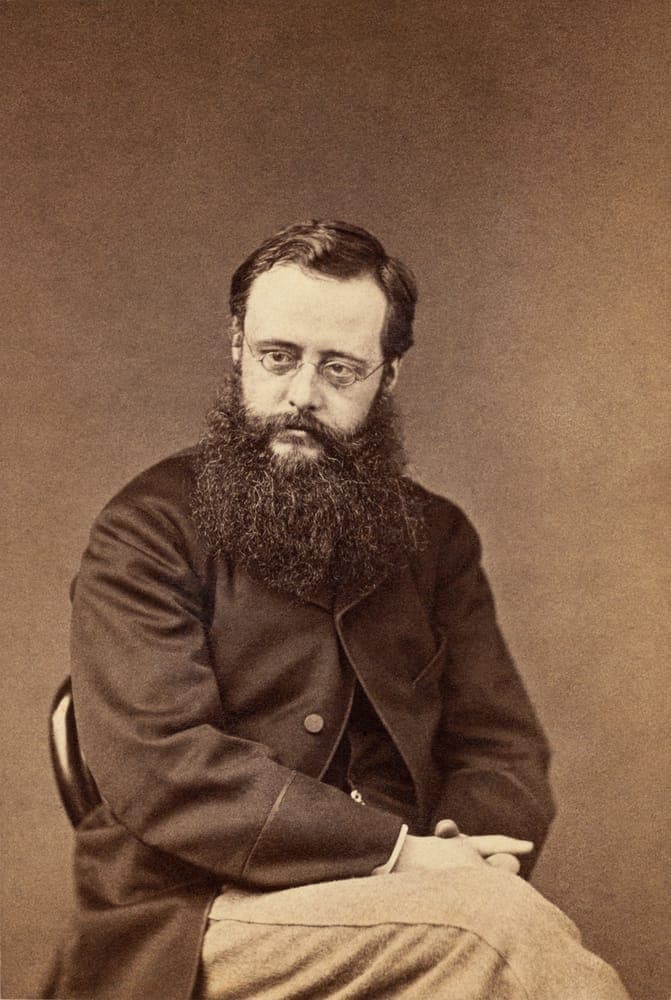
Author
Wilkie Collins
- Lived
- Lived 1824 to 1889
- From
- From British
- Born in
- Born in Marylebone, London
Born William Wilkie Collins on January 8, 1824, at 11 New Cavendish Street in London, the son of the Royal Academician landscape painter William Collins and Harriet Geddes, he was named for the painter David Wilkie, his godfather, and was known from boyhood by his middle name. The family was strictly Anglican, and his mother enforced punishing church attendance that he never forgave. From 1836 to 1838 he lived with his parents in Italy and France, learning Italian on the spot and beginning his French. He was apprenticed at sixteen to the London tea merchants Antrobus and Co., disliked the work, and after his father's death in 1847 turned to writing biography and fiction. His first novel, Antonina (1850), brought him to the attention of Charles Dickens, who made him a friend, collaborator, and contributor to Household Words and All the Year Round for the next two decades. The Woman in White (1860), narrated by a chorus of voices on the model of legal depositions, was the first English sensation novel, and queues formed at Mudie's circulating library on publication day. The Moonstone (1868) gave the modern detective story most of its furniture: the locked-room theft, the country-house cast, the unreliable witnesses, the methodical investigating officer. He wrote more than thirty novels in all, including No Name (1862), Armadale (1866), and The Law and the Lady (1875). He kept two households, never marrying either Caroline Graves, with whom he lived for most of his life, or Martha Rudd, with whom he had three children under the assumed name William Dawson. Laudanum, taken for crippling gout, ruined his last decade. He died at 82 Wimpole Street in London on September 23, 1889, at the age of sixty-five.
In 1868, a third of the way through The Moonstone, Collins's mother died and gout struck with what he called the bitterest affliction of his life. Unable to hold a pen, he dictated long stretches to a secretary through the pain, and later insisted he had no memory of composing them at all.
I am dying, old friend.
The first button needs the app on this device; the second gets it there.
In the canon
- The Woman in White1860
- No Name1862
- Armadale1866
- The Moonstone1868
- The Law and the Lady1875