
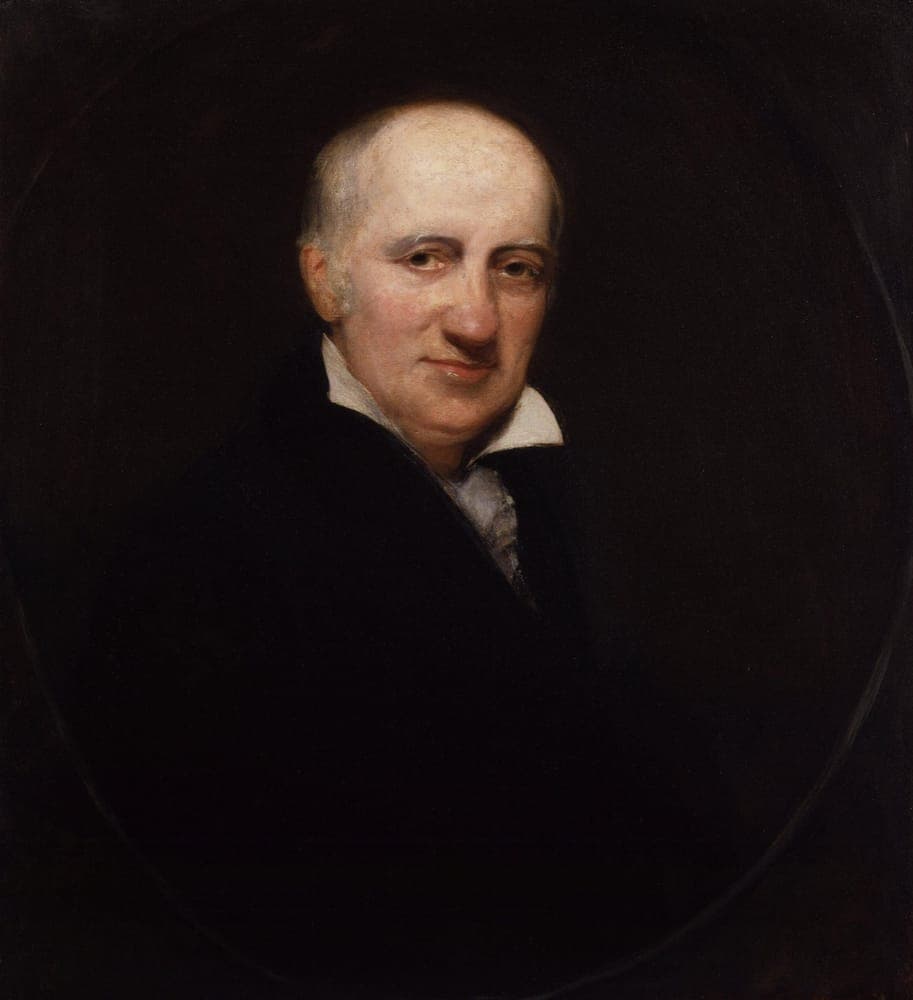
Author
William Godwin
- Lived
- Lived 1756 to 1836
- From
- From English
Born on March 3, 1756, in Wisbech, Cambridgeshire, the seventh of thirteen children of a Dissenting minister, William Godwin was raised in a household of strict Calvinist piety. He trained for the ministry at Hoxton Academy, served small congregations in Ware, Stowmarket, and Beaconsfield, and slowly lost his faith, reading his way through the French philosophes and into a thoroughgoing rationalism. In 1782 he moved to London to live by his pen, grinding out histories, reviews, and political journalism in cramped lodgings. His turning point came with An Enquiry Concerning Political Justice (1793), a vast treatise arguing that reason, not government, should govern human affairs, which made him for a few years the most famous radical thinker in England and a touchstone for younger poets. He followed it with The Adventures of Caleb Williams (1794), a novel of pursuit and persecution written to carry his political ideas to readers who would never open the treatise. In 1797 he married Mary Wollstonecraft, the author of A Vindication of the Rights of Woman; she died eleven days after giving birth to their daughter Mary, the future author of Frankenstein. Stricken, he wrote a candid memoir of his wife (1798) whose frankness about her life and loves scandalised the public and damaged his reputation for decades. His later novels, St Leon (1799) and Fleetwood (1805), and the children's books he published under pseudonyms kept him perpetually in debt. He befriended and then bitterly quarrelled with Percy Bysshe Shelley, who eloped with his daughter. Godwin died on April 7, 1836, in London, at the age of eighty, and was buried beside Wollstonecraft.
The first button needs the app on this device; the second gets it there.
In the canon
- Enquiry Concerning Political Justice1793
- The Adventures of Caleb Williams1794
- Memoirs Of The Author Of A Vindication Of The Rights Of Woman1798