
Author
William Hope Hodgson
- Lived
- Lived 1877 to 1918
- From
- From English
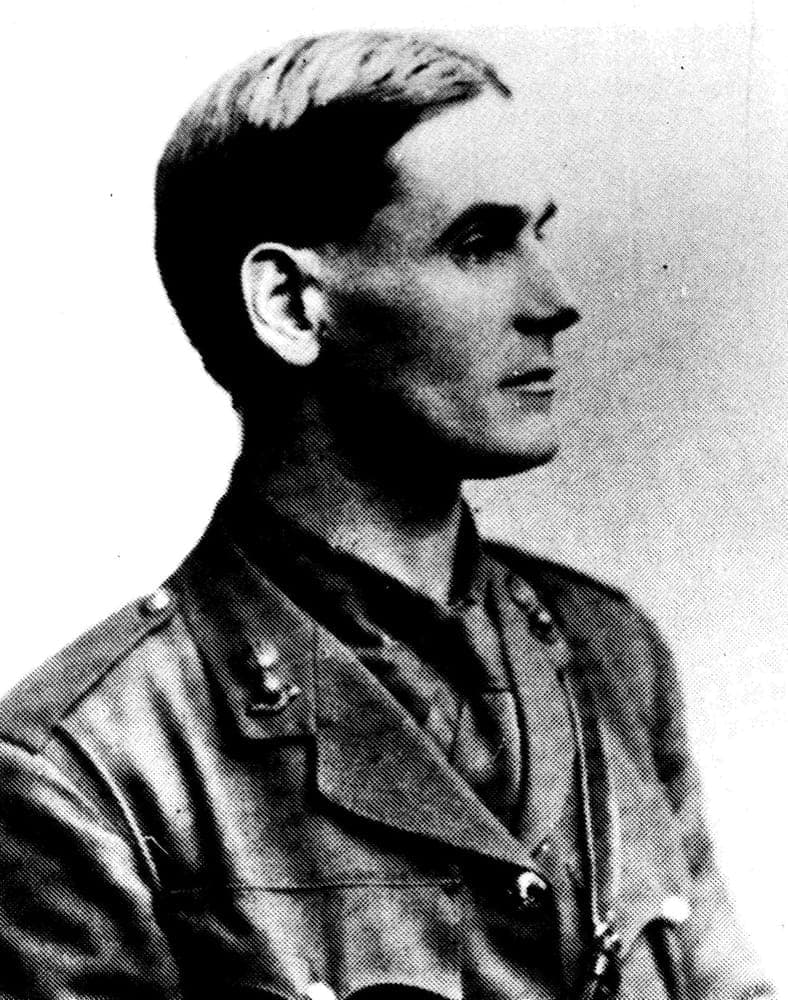
Born on November 15, 1877, in Blackmore End, Essex, the second of twelve children of an Anglican clergyman whose postings kept the family moving, William Hope Hodgson grew up restless and poorly schooled. At thirteen he ran away to sea, was caught and returned, then signed on as a cabin boy and spent roughly eight years sailing the world's oceans, an apprenticeship in storm, monotony, and dread that fed nearly everything he later wrote. He hated the brutality of shipboard life and took up bodybuilding to defend himself against larger men, eventually opening a School of Physical Culture in Blackburn and lecturing with photographs of his own muscled frame. He once handcuffed the escape artist Harry Houdini in a public challenge. Writing came late and out of need. He sold articles, then weird tales, then the four novels that made his name: The Boats of the Glen Carrig (1907), The House on the Borderland (1908), The Ghost Pirates (1909), and The Night Land (1912), a vast far-future romance written in deliberately archaic prose. His Carnacki the Ghost-Finder stories (1910-1912) gave the occult detective an enduring template, and short pieces like "The Voice in the Night" (1907) and "The Derelict" (1912) distilled his terror of the open sea. He married Bessie Farnworth in 1913 and the couple settled briefly in southern France. When war came he enlisted, was invalided out after a riding accident, then rejoined and went to the front as a lieutenant in the Royal Field Artillery. He was killed by a German shell near Ypres, Belgium, on April 19, 1918, at the age of forty, his body never recovered.
The first button needs the app on this device; the second gets it there.
In the canon
- The Boats Of The "Glen Carrig"1907
- The House On The Borderland And Other Novels1908
- The Ghost Pirates1909
- The Night Land1912
- Carnacki The Ghost Finder1913