
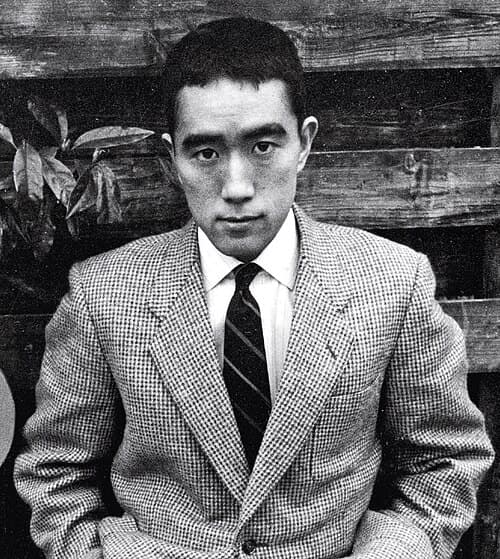
Author
Yukio Mishima
- Lived
- Lived 1925 to 1970
- From
- From Japanese
- Born in
- Born in Tokyo, Japan
Born Kimitake Hiraoka on January 14, 1925, in the Yotsuya district of Tokyo, the son of Azusa Hiraoka, a minor government official, and Shizue, daughter of a school principal. His childhood was dominated by his grandmother Natsuko, a proud, sickly woman of samurai lineage who kept the boy sequestered in her darkened sickroom, away from sunlight and other children, until he was twelve. He began writing at sixteen and adopted the pen name Yukio Mishima to hide his literary pursuits from his father. His first major novel, Confessions of a Mask (1949), a thinly veiled autobiography about a young man concealing his homosexuality behind a façade of normality, made him famous at twenty-four. He wrote at a ferocious pace , forty novels, twenty volumes of short stories, eighteen plays , while also bodybuilding, acting in films, and modeling. The Temple of the Golden Pavilion (1956), based on the real arson of Kyoto’s Kinkaku-ji by one of its acolytes, is a study of beauty’s destruction by obsession. He was nominated for the Nobel Prize in Literature five times in the 1960s but never received it; the prize went instead to his mentor, Yasunari Kawabata, in 1968. His final work, the tetralogy The Sea of Fertility (1965–1970), traces Japan’s transformation across the twentieth century through four interconnected novels. On the morning of November 25, 1970 , having delivered the final installment to his publisher that very day , Mishima and four members of his private militia seized the office of a commanding general at a military base in central Tokyo. He addressed a thousand assembled soldiers from a balcony, urging them to overthrow Japan’s postwar constitution. They jeered. Mishima withdrew inside and committed seppuku. He was forty-five.
In 1966 Mishima wrote, directed and starred in a silent short film, Patriotism, playing an army officer who commits seppuku while his wife looks on. He staged his own disembowelment on camera four years before performing it in life. After his death his family had every print destroyed.
Long live the Emperor!
The first button needs the app on this device; the second gets it there.
In the canon
- Confessions of a Mask1949
- Thirst for Love1950
- Forbidden Colors1951
- The Sound of Waves1954
- The Temple of the Golden Pavilion1956
- The Sailor Who Fell From Grace With The Sea1963
- The Sea of Fertility1965
- Spring Snow1969
- Runaway Horses1969
- The Temple of Dawn1970
- The Decay of the Angel1971