
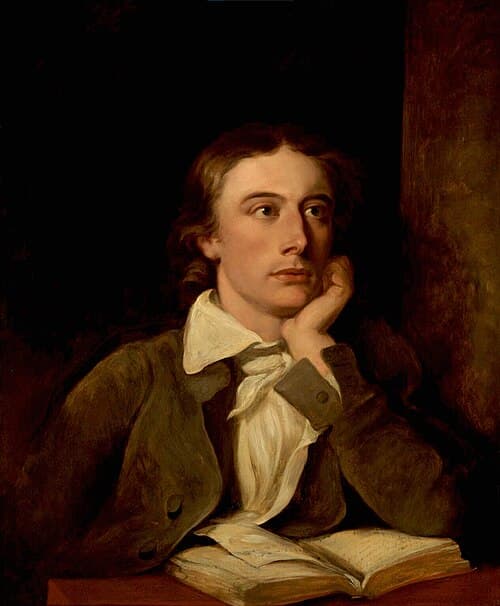
The cold comes first: an owl shivering for all its feathers, a hare limping trembling through the frozen grass, an old Beadsman at prayer, his breath rising like incense. Into this freezing castle Keats sets a ritual: on St. Agnes' Eve, a girl who keeps the rites will dream of her future husband, and young Madeline climbs to her chamber to try it. She does not know that Porphyro, born to the house her family hates, has crept inside and hidden to watch her unclasp her warmed jewels by moonlight pouring through a stained-glass casement to throw warm crimson across her breast. He heaps a feast of candied apple, quince, and spiced dainties beside her sleeping bed, wakes her with an old Provencal tune on her lute, and steps so exactly into her dream that she cannot tell which Porphyro is real. He wrote it at twenty-three, in Spenserian stanzas that coil and enclose like sleep itself, and made even his most vivid sensations arrive already receding, the whole warm night dissolving into something that happened ages long ago.