
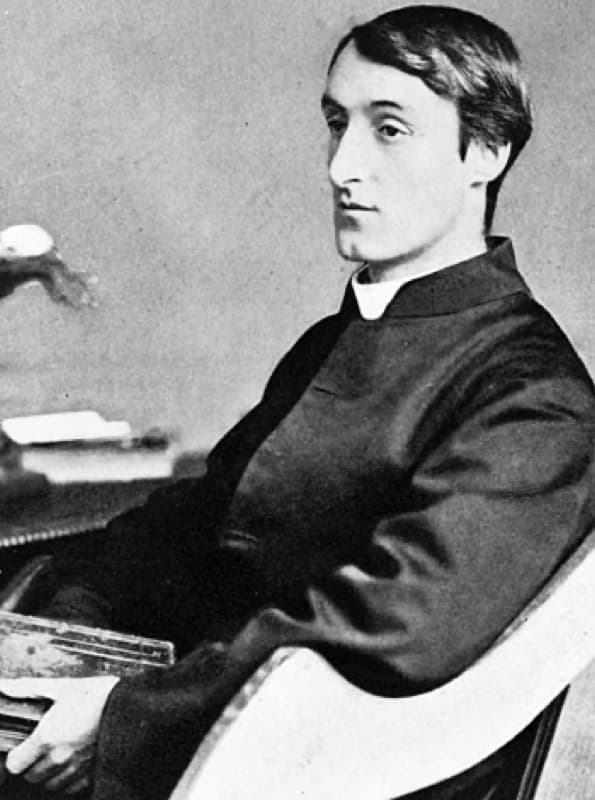
Watch a kestrel pin itself against a strong wind, wings beating to hold one point of sky perfectly still, and you have the thing Hopkins caught one morning in the Welsh hills and turned into the sonnet he called the best he ever wrote. The poem does not describe the bird so much as enact it: its sprung rhythm crams stress against stress until "dapple-dawn-drawn Falcon" and the "rolling level underneath him steady air" have to be spoken aloud, the mouth made to ride and rebuff the very wind the falcon rides. Hopkins was a Jesuit who had burned his early verse and vowed his whole gift to God, and the bird's sheer mastery breaks something open in him. At the turn, one word does the work of a theology: "Buckle" means both to clasp into glory and to crumple, and he refuses to choose. The proof comes in the last lines, a hearth's blue-bleak embers that fall, gall themselves, and gash gold-vermilion, beauty that lets out its fire only by breaking.