

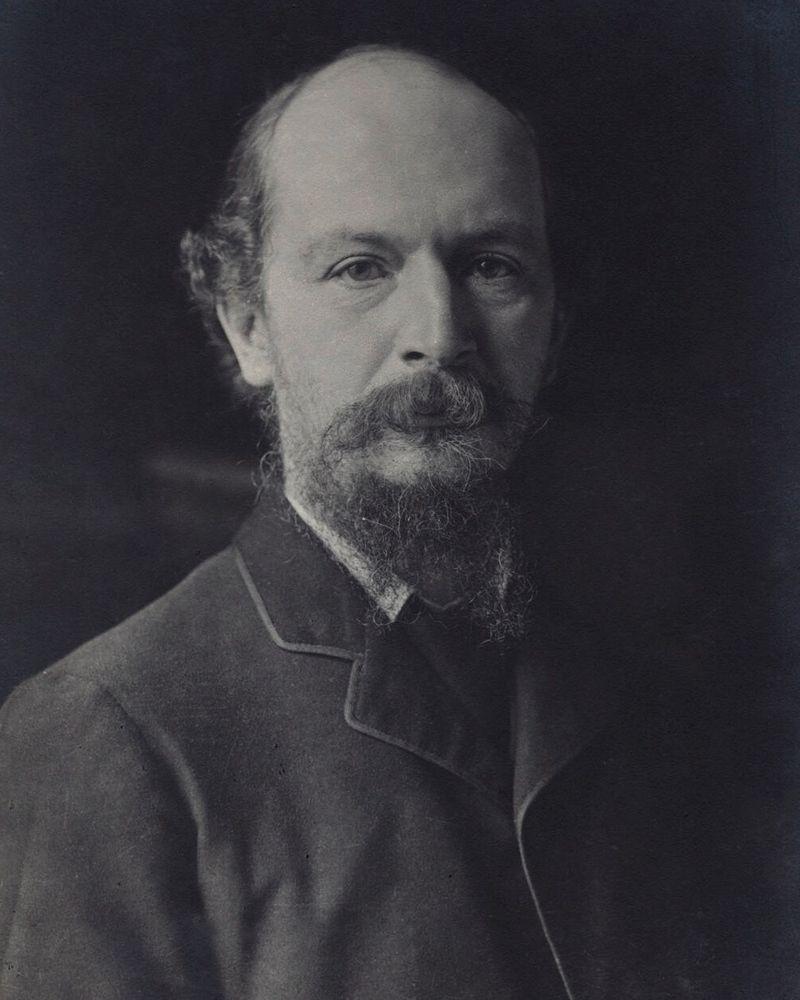
Author
Algernon Charles Swinburne
- Lived
- Lived 1837 to 1909
- From
- From English
- Born in
- Born in London, England
Born on April 5, 1837, at 7 Chester Street in London, Algernon Charles Swinburne was the eldest of six children of Captain, later Admiral, Charles Henry Swinburne and Lady Jane Henrietta, daughter of the third Earl of Ashburnham. He grew up at East Dene in Bonchurch on the Isle of Wight and spent his summers at Capheaton Hall in Northumberland, the house of his grandfather, Sir John Swinburne, whose library was famous; he came to love the sea, riding and the poets with the same fierceness. At Eton (1849-1853) he won prizes in French and Italian and began to write verse. At Balliol College, Oxford, he met Dante Gabriel Rossetti, William Morris and Edward Burne-Jones in 1857, while they were painting the walls of the Union, and in 1859 he was rusticated for publicly praising Felice Orsini's attempt on the life of Napoleon III; he left in 1860 without a degree. His first book, The Queen-Mother and Rosamond (1860), went almost unnoticed, but Atalanta in Calydon (1865), a verse drama in the form of a Greek tragedy, made him famous. Poems and Ballads (1866) caused a sensation: its homages to Sappho, among them "Anactoria," and its pagan, sensual music so outraged the reviewers that Moxon gave the book up and John Camden Hotten took it over. Songs before Sunrise (1871) turned his energies to the cause of Italian liberty and to Mazzini, and Tristram of Lyonesse (1882) retold the Arthurian romance in rhyming couplets. Through the 1870s drink and nervous excess wore down his health, and in 1879 his friend Theodore Watts-Dunton took him into his house, The Pines, on Putney Hill, where he lived quietly and increasingly deaf for the last thirty years of his life, writing criticism, plays and more poems. He died at The Pines on April 10, 1909, aged seventy-two, and was buried in the churchyard of St Boniface at Bonchurch, where he had grown up.
Late in 1854 his parents refused him the cavalry, thinking him too slight for a soldier. So Swinburne, seventeen, tested his nerve on Culver Cliff, the chalk headland of the Isle of Wight he believed no one had climbed from the sea, and reached the top. His mother laughed: "Nobody ever thought you were a coward, my boy."
The first button needs the app on this device; the second gets it there.
In the canon
- Atalanta in Calydon1865
- Poems and Ballads1866