

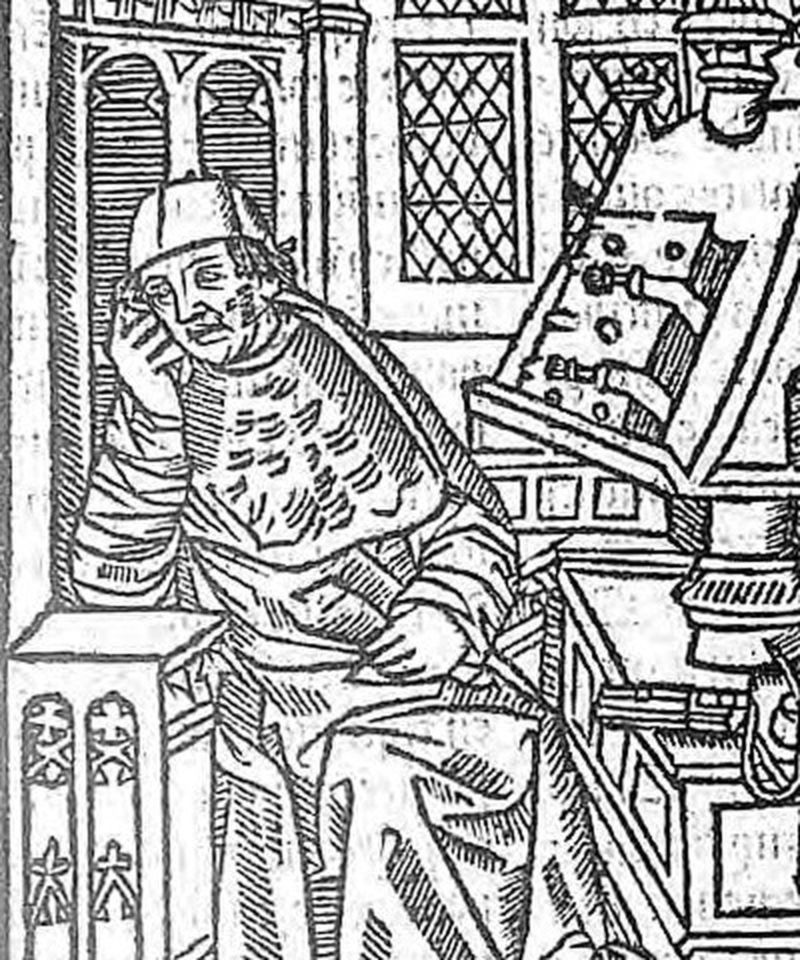
Author
Chrétien de Troyes
- Lived
- Lived 1135 to 1191
- From
- From French
- Born in
- Born in Champagne, France
Almost nothing is known of Chrétien de Troyes beyond what he put into his poems, and even his name, Christian of Troyes, is a clue rather than a record. He was probably born in the 1130s, a clerk educated in Latin who served his apprenticeship turning Ovid into French, work of which only Philomela, the tale of the nightingale, survives. From about 1160 he wrote at Troyes, at the court of Marie, Countess of Champagne, the daughter of Louis VII and Eleanor of Aquitaine, who married Count Henry of Champagne in 1164. There, in rhyming couplets of eight syllables, he invented the Arthurian romance. Erec and Enide (about 1170), the oldest Arthurian romance to survive in any language, follows a knight who neglects his arms for his wife and has to win his name back with her riding ahead of him; Cligès (about 1176) joins a Byzantine love story to Arthur's court and answers the tale of Tristan and Iseut. Between about 1177 and 1181 he wrote two poems side by side. Lancelot, or the Knight of the Cart, whose matter and meaning he said Marie herself had given him, brought the love of Lancelot and Guinevere into the world and named Camelot for the first time; Yvain, or the Knight of the Lion, is the most finely built of all his work. His last patron was Philip of Alsace, Count of Flanders, for whom he began Perceval, or the Story of the Grail, the first appearance of the Grail in any literature. Philip died at Acre on the Third Crusade in 1191, and the poem breaks off after some nine thousand lines, almost in the middle of a sentence. Four continuators added about fifty-four thousand more, Wolfram von Eschenbach remade it as Parzival, Hartmann von Aue carried Erec and Yvain into German, and the French prose romances that Malory later gathered into English grew from the knights Chrétien had sent out.
He did not finish the Knight of the Cart himself. In its closing lines another voice speaks: Godefroi de Leigni, a clerk, says that he wrote the ending, from the point where Lancelot was walled up in the tower, and that he did it with the consent of Chrétien, who began it, so no one should blame him.
The first button needs the app on this device; the second gets it there.
In the canon
- Erec And Enide1160
- Yvain1177
- Arthurian Romances1180
- Perceval, Or The Story Of The Grail1181