

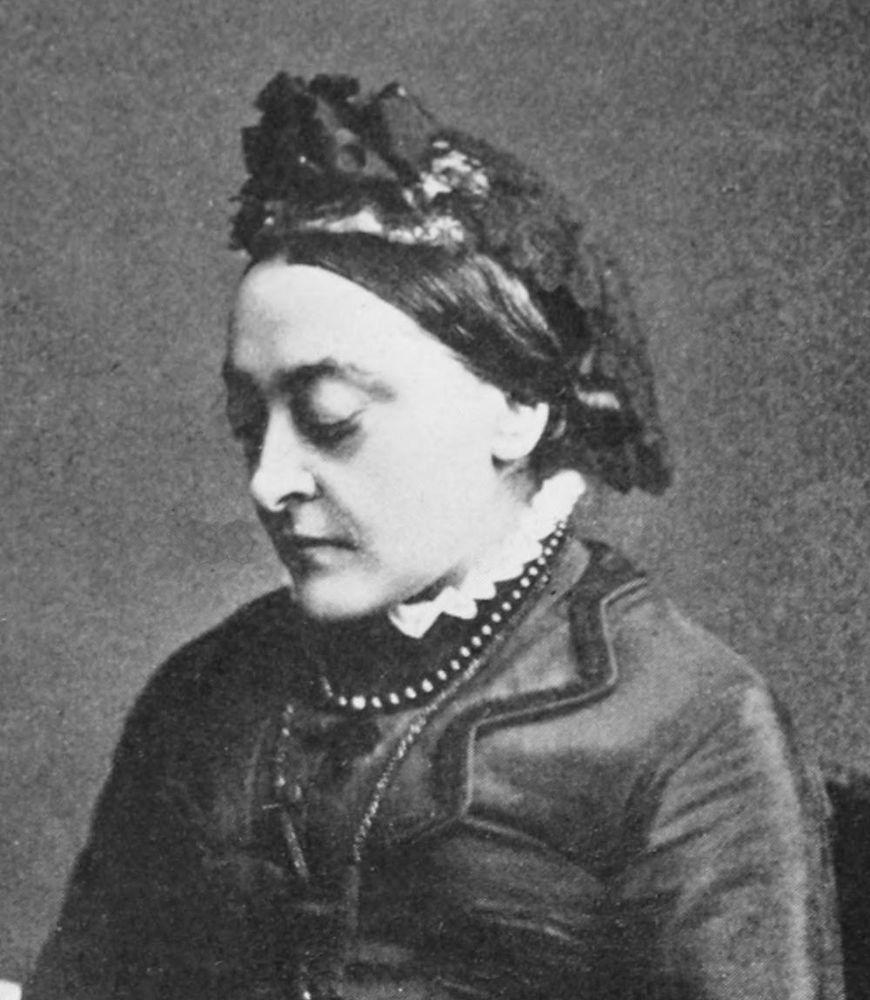
Author
Christina Rossetti
- Lived
- Lived 1830 to 1894
- From
- From English
- Born in
- Born in London, England
Born on December 5, 1830, at 38 Charlotte Street in London, Christina Georgina Rossetti was the youngest of the four children of Gabriele Rossetti, a poet and political exile from Vasto in the Kingdom of Naples, and Frances Polidori, sister of Byron's physician John William Polidori. Her brothers Dante Gabriel and William Michael went away to school, but she and her sister Maria were taught at home by their mother, and she read the Bible, the classics, fairy tales, Keats, Scott and the Gothic novels of Ann Radcliffe and Matthew Lewis. Her grandfather Gaetano Polidori printed her first small book, Verses, on his private press in 1847. At fourteen she suffered a breakdown that left her prone to depression and illness, and in the same years she, her mother and her sister were drawn into the Anglo-Catholic movement in the Church of England, a faith that ruled the rest of her life. She sat for the Virgin Mary in her brother Gabriel's early paintings, and in 1850 published poems in the Pre-Raphaelite magazine The Germ under the name Ellen Alleyne. That year she ended her engagement to the painter James Collinson after he returned to Roman Catholicism, and in the 1860s she declined to marry the scholar Charles Cayley because he did not share her faith. From 1859 to 1870 she worked as a volunteer at the London Diocesan Penitentiary in Highgate, a refuge for women who had lived by prostitution. Goblin Market and Other Poems (1862), with designs by Gabriel, made her name; The Prince's Progress and Other Poems followed in 1866 and the nursery rhymes of Sing-Song in 1872, the year she was found to have Graves' disease, which nearly killed her. Her later decades went largely to devotional prose, among it Time Flies (1885) and The Face of the Deep (1892). She died of cancer in Bloomsbury on December 29, 1894, at sixty-four.
At a party given by Mrs Virtue Tebbs, a little woman dressed in black rose from her chair, paced into the centre of the room and announced solemnly, 'I am Christina Rossetti!' Then she went back to her seat. Virginia Woolf took the moment as the title of the essay she wrote for the poet's centenary in 1930.
The first button needs the app on this device; the second gets it there.