

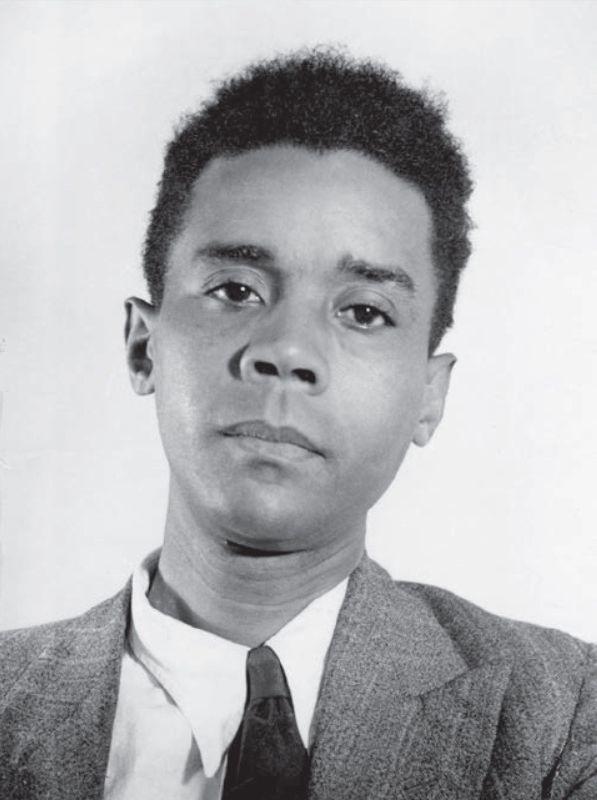
Author
C.L.R. James
- Lived
- Lived 1901 to 1989
- From
- From Trinidadian
- Born in
- Born in Tunapuna, Trinidad
Born Cyril Lionel Robert James on January 4, 1901, in Tunapuna, Trinidad, the first child of a schoolteacher, Robert Alexander James, and Ida Elizabeth Rudder, he won a scholarship in 1910 to Queen's Royal College in Port of Spain and grew up between two passions he never thought of as separate: English literature and cricket. He returned to the college to teach English and history, and among his pupils was Eric Williams, later the first prime minister of Trinidad and Tobago. In the 1920s he wrote stories for the Beacon group of young anticolonial writers. In 1932 he sailed for England at the invitation of the cricketer Learie Constantine, lodging with him in Nelson, Lancashire, and was soon writing on cricket for the Manchester Guardian under Neville Cardus. London made him a Marxist and a Pan-Africanist: he chaired the International African Friends of Abyssinia in 1935, published Minty Alley (1936), a novel of the Port of Spain barrack-yards, saw his play Toussaint Louverture staged with Paul Robeson in the title role, and wrote World Revolution (1937) before The Black Jacobins (1938), his history of the Haitian Revolution and the slaves who made it. A lecture tour of the United States in 1938 turned into fifteen years there; he visited Trotsky in Mexico in 1939, built the Johnson-Forest Tendency with Raya Dunayevskaya and Grace Lee, married Constance Webb, and in 1953 was deported to Britain. In 1958 Williams called him home to edit The Nation for the People's National Movement, but the two fell out within two years. Beyond a Boundary (1963), part memoir and part social history of West Indian cricket, asked what they know of cricket who only cricket know. He spent his last years in a room above the offices of Race Today in Brixton, where he died on May 31, 1989, at eighty-eight.
In 1952 the American immigration service detained James on Ellis Island while it moved to deport him. He spent the detention writing about Moby-Dick, reading Ahab's crew of mariners, renegades and castaways as a picture of the America that was holding him. He printed the book privately in 1953, and that same year he was deported to Britain.
The first button needs the app on this device; the second gets it there.
In the canon
- The Black Jacobins1938