

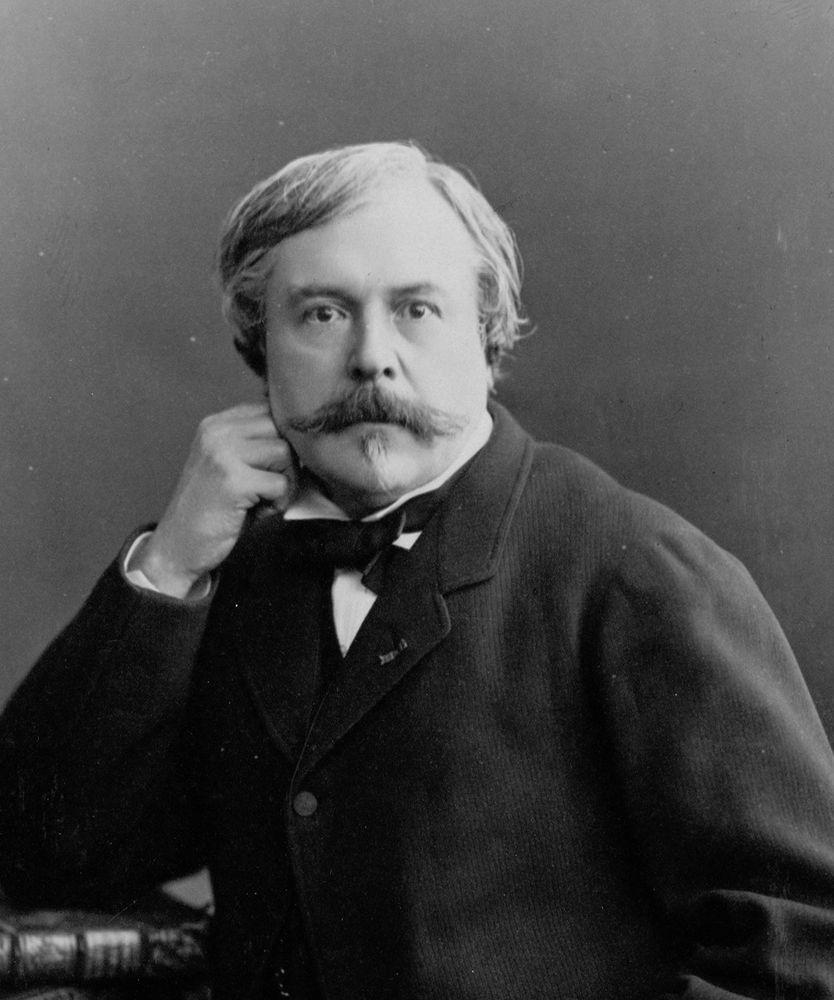
Author
Edmond de Goncourt
- Lived
- Lived 1822 to 1896
- From
- From French
- Born in
- Born in Nancy, France
Edmond Louis Antoine Huot de Goncourt was born in Nancy on 26 May 1822, the elder son of Marc-Pierre Huot de Goncourt, a former cavalry officer of Napoleon's Grande Armée, and Annette-Cécile Guérin. His brother Jules was born in Paris on 17 December 1830, and for the next forty years the two lives ran as one. Edmond was schooled at the Lycée Henri IV and the Lycée Condorcet, read law, and took a clerk's post at the Treasury that made him so miserable he thought of suicide. Their mother's death in 1848 left the brothers a private income, and they gave themselves to art and letters, writing together, every book and nearly every page, until Jules died. Their first novel, En 18.., appeared in 1851, the year they began the Journal, a shared diary of literary Paris. They wrote histories of eighteenth-century society, the essays of L'Art du XVIIIe siècle (1856 to 1875), and novels built from documents and observed life: Soeur Philomène (1861), Renée Mauperin (1864), Germinie Lacerteux (1865), drawn from the hidden life of their own servant and one of the first French novels of working-class life, Manette Salomon (1867) and Madame Gervaisais (1869). In 1868 they moved to a house at Auteuil, and there Jules died of syphilis on 20 June 1870, aged thirty-nine. Edmond went on alone. He wrote La Fille Élisa (1877), Les Frères Zemganno, a novel of two acrobat brothers, La Faustin (1882) and Chérie (1884), as well as La Maison d'un artiste (1881), a tour of the Auteuil house and its collections, and studies of the Japanese printmakers Utamaro (1891) and Hokusai (1896). On Sundays writers climbed to the Grenier, the attic he had made into a salon, and from 1887 he published the Journal in nine volumes, to the fury of friends who found themselves in it. He died at Alphonse Daudet's house at Champrosay on 16 July 1896, aged seventy-four, and left his fortune to found the Académie Goncourt, which has given the Prix Goncourt every year since 1903.
In 1862 the brothers buried Rose Malingre, their housekeeper, and grieved for her as one of the family. Only after her death did the truth come out: she had stolen from them to pay for a secret life of lovers and nights out, and they had never suspected any of it. Three years later her story became Germinie Lacerteux.
The first button needs the app on this device; the second gets it there.
In the canon
- Germinie Lacerteux1865
- Pages From The Goncourt Journal1887