

Author
Emma Goldman
- Lived
- Lived 1869 to 1940
- From
- From Russian-American
- Born in
- Born in Kovno, Russian Empire
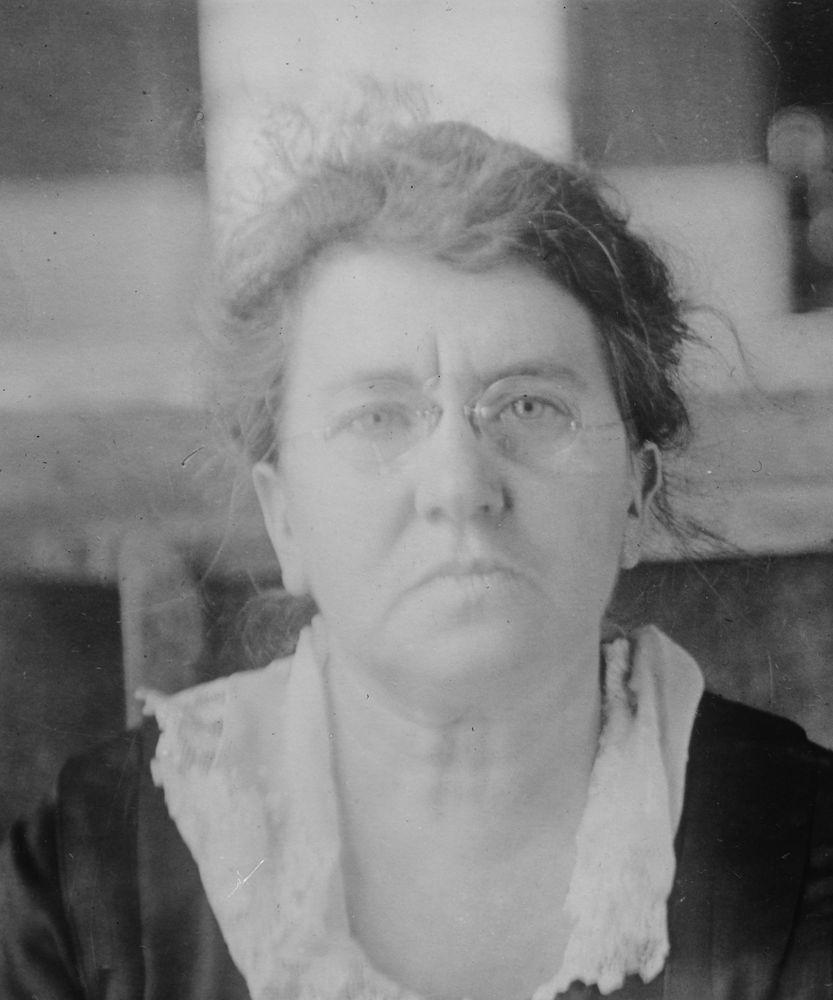
Emma Goldman was born on June 27, 1869, in Kovno, in the Lithuanian lands of the Russian Empire, to an Orthodox Jewish family; her father, Abraham Goldman, was a stern and disappointed man, and her girlhood moved between Kovno, Königsberg and St Petersburg, where she left school for factory work. At the end of 1885 she sailed for America with her half-sister Helena and settled in Rochester, New York, where she worked as a seamstress and married a fellow worker, Jacob Kershner, in a match that did not last. The hanging of the Haymarket anarchists in Chicago in November 1887 made her a radical, and in 1889 she moved to New York, where on her first day she met Alexander Berkman, who became her lover and lifelong comrade. In 1892 Berkman shot the steel magnate Henry Clay Frick during the Homestead strike, an attempt she had helped him prepare, and was sentenced to twenty-two years; the next year a speech to the unemployed in Union Square earned her a year on Blackwell's Island. She trained as a nurse and midwife in Vienna, lectured across America on anarchism, free love, birth control and the modern drama, and in 1906 founded the monthly Mother Earth. Anarchism and Other Essays followed in 1910. In 1917 she and Berkman were convicted of conspiring against the draft and served two years in federal prison, and in December 1919 they were deported to Soviet Russia aboard the Buford with more than two hundred others, J. Edgar Hoover having called them two of the most dangerous anarchists in the country. Two years among the Bolsheviks produced My Disillusionment in Russia (1923). Stateless, she married the British anarchist James Colton in 1925 for a British passport, wrote her autobiography Living My Life (1931) in a cottage at Saint-Tropez, and in 1936 went to Barcelona to work for the anarchists of the Spanish Civil War. She died in Toronto on May 14, 1940.
Sent to Blackwell's Island in 1893, Goldman found a vocation in the prison. A visiting physician, Dr White, kept her in the hospital ward to care for the sick and taught her to take pulses and temperatures; in time she had entire charge of the ward and its rations. She later called the prison the crucible that tested her faith.
The first button needs the app on this device; the second gets it there.
In the canon
- Living My Life1931