
Author
Frans Eemil Sillanpää
- Lived
- Lived 1888 to 1964
- From
- From Finnish
- Born in
- Born in Hämeenkyrö, Finland
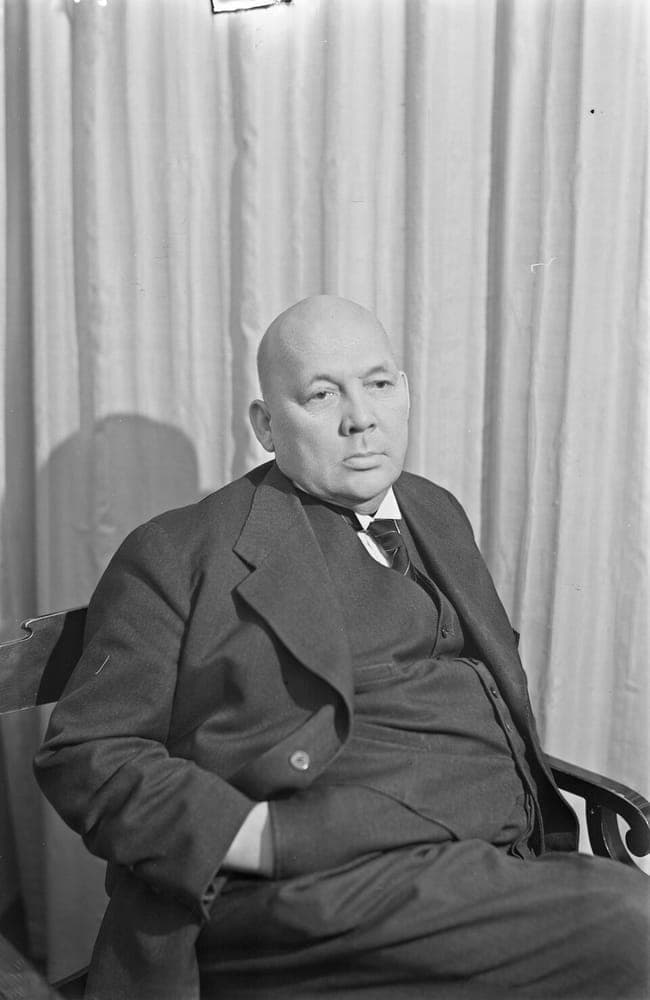
Born on September 16, 1888, in Hämeenkyrö, in western Finland, Frans Eemil Sillanpää was the son of Frans Henrik Koskinen, a cottager, and Loviisa Mäkelä, a former servant, poor country people who had already lost two children in infancy. With the help of a patron, the manufacturer Henrik Liljeroos, the boy went to the lyceum in Tampere, tutoring other families' sons to pay his way, and in 1908 he entered the University of Helsinki meaning to become a doctor. He read biology instead, took in Darwin and Ernst Haeckel, spent long evenings with the Järnefelt family at Tuusula, where he met Jean Sibelius, Pekka Halonen and Juhani Aho, began to drink heavily, and in 1913 went home to Hämeenkyrö without a degree. His first novel, Life and the Sun (1916), made his name and got him branded an erotic writer. That year he married Sigrid Salomäki, a smallholder's daughter, and they had eight children. Meek Heritage (1919), the life of a crofter drawn into the Red Guard and shot by the Whites in 1918, angered both sides of the Civil War, and a half-finished villa started a cycle of debt that ran through the 1920s until the publisher Otava bought his rights and paid what he owed. The Maid Silja (1931) carried him abroad. Sigrid died of pneumonia in April 1939, and that autumn he became the first Finn to win the Nobel Prize in Literature. He collected it in Stockholm after the Soviet invasion had begun, gave his gold medal to the war effort, and stayed in Sweden raising money for Finland. A short second marriage, alcoholism and nearly three years in hospital followed. He came back as Taata, the bald, grey-bearded grandfather whose Christmas Eve talks on the radio the country listened to every year from 1945. He died in Helsinki on June 3, 1964, aged seventy-five, and was buried at Hämeenkyrö.
In December 1938 Sillanpää published a Christmas letter to Hitler, Stalin and Mussolini in a Social Democratic paper, telling them that their power reached no higher than dust. He had joked to his publisher that the dictatorships admired him only because they had not noticed he was a writer who should be burnt at the stake. Germany banned his books.
The first button needs the app on this device; the second gets it there.
In the canon
- Meek Heritage1919