
Author
Gabriela Adameșteanu
- Lived
- Lived born 1942
- From
- From Romanian
- Born in
- Born in Târgu Ocna, Romania
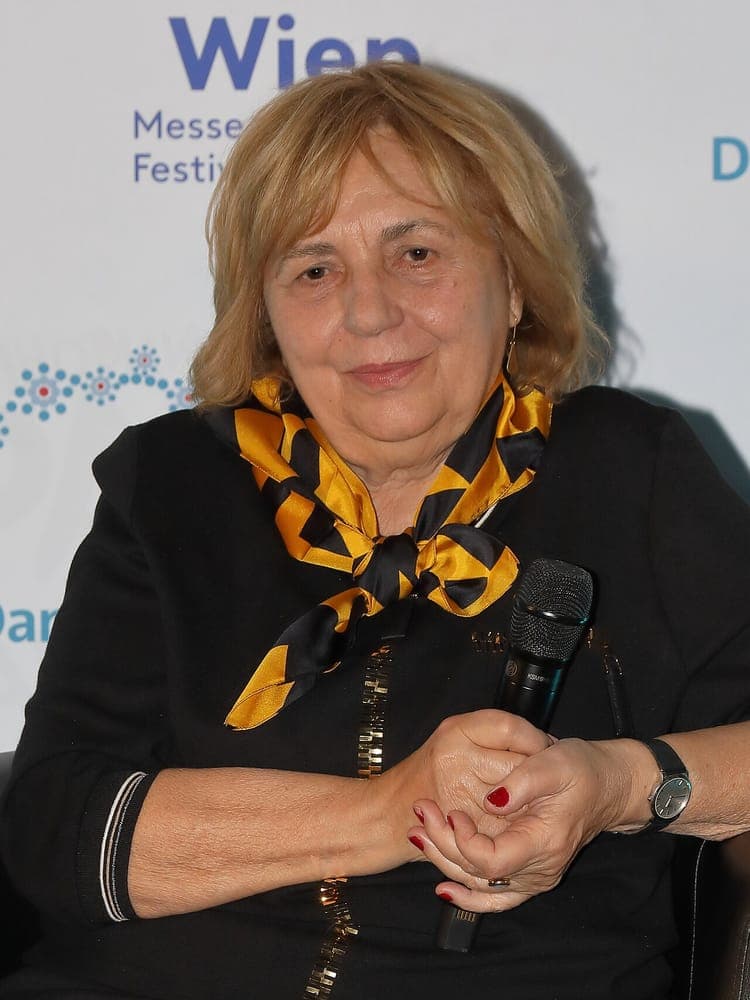
Gabriela Adameșteanu was born on April 2, 1942, in Târgu Ocna, in Moldavia, the daughter of two teachers: her father, Mircea, taught history, and her mother, Elena, taught home economics until the communist authorities struck the subject from the curriculum and sent her to work in a kindergarten. One uncle became a political prisoner; another, the archaeologist Dinu Adameșteanu, had found refuge in Italy. She grew up largely in Pitești, studied Romanian literature at the University of Bucharest from 1960 to 1965, and graduated with a thesis on Marcel Proust. For nearly two decades she worked as an editor at a scientific and encyclopedic publishing house, writing on the side; her first novel, The Equal Way of Every Day (1975), won both the Writers' Union prize for a debut and the prize of the Romanian Academy. Her second, Wasted Morning, dated 1983 and in the shops in April 1984, follows an old Bucharest woman, Vica Delcă, across a single morning of visits while the voices she meets carry the country back to the eve of the First World War. Pages cut by the censor were restored only after 1989, yet the book won the Writers' Union prize for prose and became one of the most celebrated Romanian novels of its century; in 1986 Cătălina Buzoianu staged it at the Bulandra Theatre. From 1985 she was an editor at Cartea Românească, a job she later described as being censored and asked to censor at once. After the revolution she joined the Group for Social Dialogue, ran its weekly magazine, 22, and served as president of Romanian PEN from 2004 to 2006. She returned to fiction with The Encounter (2003), a novel she rewrote four times, followed by Provizorat (2010), the memoir Anii romantici (2014) and Fontana di Trevi (2018). France made her a Chevalier of Arts and Letters in 2014, and she lives in Bucharest.
Wasted Morning had long been called untranslatable, so in the early 2000s Adameșteanu paid the translator Alain Paruit out of her own pocket to put one chapter into French. She sent it to ten or fifteen publishers and gathered refusals. Gallimard took the novel in 2005, and Paruit, having placed the chapter in a magazine, gave her the money back.
The first button needs the app on this device; the second gets it there.
In the canon
- Wasted Morning1984