
Author
Georges Rodenbach
- Lived
- Lived 1855 to 1898
- From
- From Belgian
- Born in
- Born in Tournai, Belgium
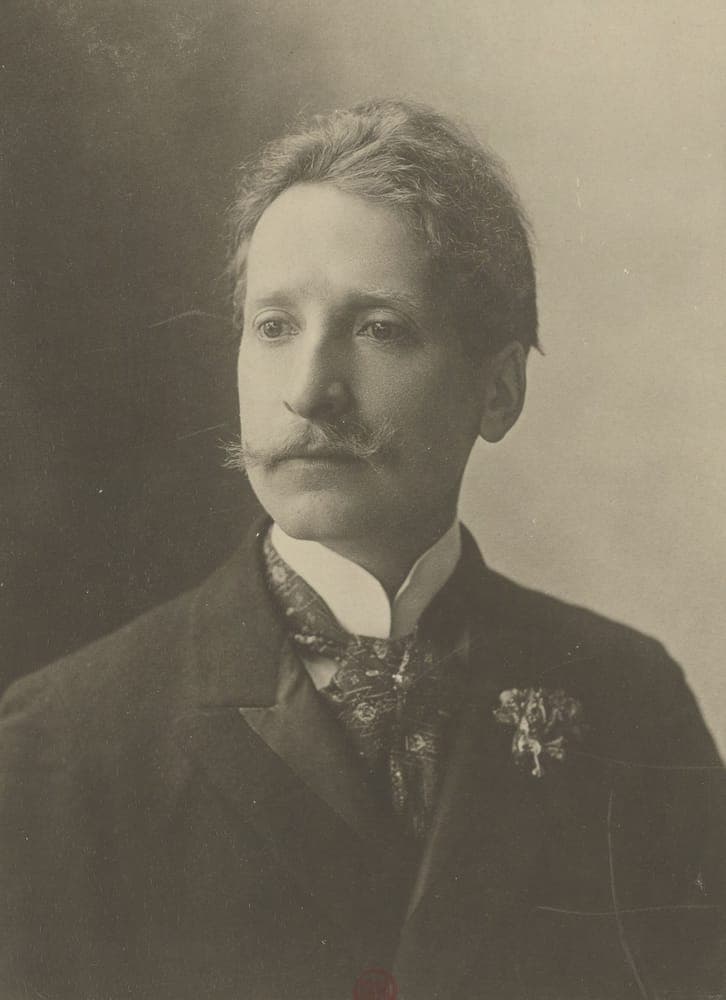
Georges Rodenbach was born on July 16, 1855, on the rue des Augustins in Tournai, into a family that had helped to found Belgium: his grandfather Constantin, a surgeon, sat in the assembly that wrote its constitution, and his cousin Albrecht Rodenbach became a poet of the Flemish revival. Within months the family moved to Ghent, where he grew up and where, at the Collège Sainte-Barbe, he met Émile Verhaeren, who stayed his friend for life. He read law at Ghent University, spent a season in Paris in 1878 among the Hydropathes, where he met François Coppée and Catulle Mendès, and then worked in Brussels beside the lawyer Edmond Picard. His first collection of poems, Le Foyer et les Champs, appeared in 1877; in 1881 he left the bar for letters, wrote for La Flandre libérale and helped launch the review La Jeune Belgique, and La Jeunesse blanche (1886) made his name in Belgium and France alike. In 1888 he married Anna-Maria Urbain and settled in Paris for good as correspondent of the Journal de Bruxelles, a dandy and a famous talker who became a regular at Mallarmé's Tuesdays and a close friend of Edmond de Goncourt, Alphonse Daudet and Auguste Rodin. Bruges-la-Morte (1892), serialised in Le Figaro and published by Flammarion, told of a widower who sees his dead wife in a dancer and made the silent, canal-bound city itself the book's chief character; it was the first work of fiction illustrated with photographs. He went back to Bruges in the novel Le Carillonneur (1897) and in the poems of Le Règne du silence and Le Miroir du ciel natal. He died in Paris on December 25, 1898, aged forty-three, and was buried at Père-Lachaise; Bruges declined a memorial medallion by Rodin, while Ghent raised a monument to him by George Minne in 1903.
His widow remembered his last talk with the young Marcel Proust, who visited him when he was already dying. Rodenbach told him not to worry: 'They say all this cures itself as one gets older.' When Proust offered a line of Joubert as comfort, he answered, 'Besides, apart from brutes, everyone is ill.'
The first button needs the app on this device; the second gets it there.
In the canon
- Bruges-la-Morte1892