

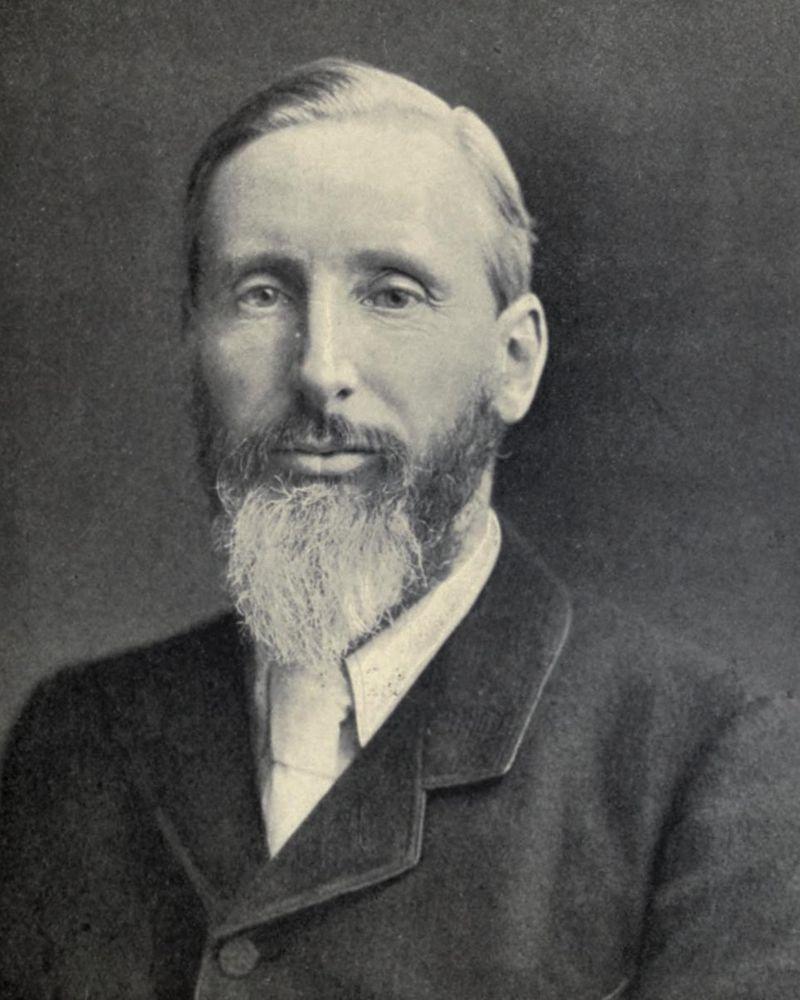
Author
Grant Allen
- Lived
- Lived 1848 to 1899
- From
- From Canadian
- Born in
- Born in Kingston, Canada
Born Charles Grant Blairfindie Allen on February 24, 1848, near Kingston, in what was then Canada West, he was the second son of Joseph Antisell Allen, a Protestant clergyman from Dublin, and Catharine Ann Grant, a daughter of the fifth Baron de Longueuil. Taught at home until he was thirteen, he followed his family to the United States, France and England, went to school at Dieppe and at King Edward's School, Birmingham, and in 1867 entered Merton College, Oxford, on a classical scholarship. While still an undergraduate he married Caroline Bootheway, a gentle young woman already in poor health, who died within a few years. After Oxford he taught Latin and Greek verse at Brighton, Cheltenham and Reading, work he called extremely uncongenial, and in 1873, newly married to Ellen Jerrard, he sailed for Jamaica as Professor of Mental and Moral Philosophy at a new government college in Spanish Town. The post was abolished, and he came home in 1876 to live by his pen. A disciple of Herbert Spencer, he wrote popular science first: Physiological Aesthetics (1877), The Colour-Sense (1879), and essays on flowers, insects and evolution. Short stories signed J. Arbuthnot Wilson drew him into fiction; his first long novel, Philistia, appeared in 1884, and What's Bred in the Bone won a thousand-pound prize from the magazine Tit-Bits in 1891. He wrote some thirty novels in fifteen years, among them An African Millionaire (1897), first serialised in the Strand, in which the swindler Colonel Clay fleeces a South African magnate again and again in a new disguise each time, and Miss Cayley's Adventures (1899). The Woman Who Did (1895), the story of a woman who on principle bears a child outside marriage, became a bestseller and a scandal, and The Evolution of the Idea of God followed in 1897. In 1893 he settled at Hindhead in Surrey, where Arthur Conan Doyle became his neighbour, and he died there of cancer of the liver on October 25, 1899, aged fifty-one.
When James Payn took over the Cornhill in 1883 he resolved to print nothing but fiction. One morning Allen opened two letters from him by the same post. The first, addressed to his own name, sent back a scientific article. The second, addressed to his pseudonym J. Arbuthnot Wilson, begged for more stories like 'Mr. Chung.'
The first button needs the app on this device; the second gets it there.
In the canon
- An African Millionaire1897