
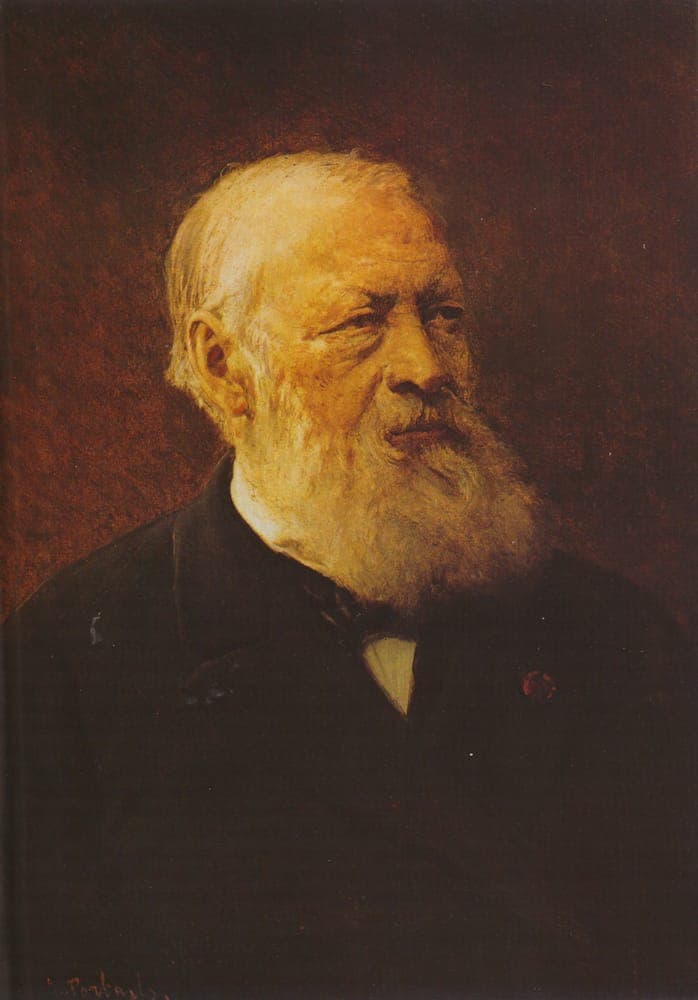
Author
Hendrik Conscience
- Lived
- Lived 1812 to 1883
- From
- From Belgian
- Born in
- Born in Antwerp, Belgium
Hendrik Conscience was born on December 3, 1812, in Antwerp, the son of Pierre Conscience, a Frenchman from Besançon who had served in Napoleon's navy and came to the port as an under-harbourmaster, and Cornelia Balieu, a Flemish woman who could not read. His mother died in 1820, and the boy grew up among the marine supplies and old books of his father's shop, reading whatever came to hand. He was an assistant teacher of seventeen when the Belgian Revolution of 1830 broke out; he volunteered, fought the Dutch around Geel and Leuven, and stayed in the army until 1836, rising to sergeant-major. He began writing in French, but in 1837 he published In 't Wonderjaer, a novel of the 1566 revolt against Spain, in Flemish. It sold poorly. The next year brought The Lion of Flanders (1838), a historical romance in the manner of Walter Scott about the Flemish militia's victory over the French knights at Kortrijk in 1302, and with it the Flemish novel was born. Through the painter Gustaf Wappers he became clerk of the Antwerp Academy of Fine Arts in 1841, and he married Maria Peinen the following year. King Leopold I commissioned a History of Belgium from him, and he taught Flemish to the king's sons. His tales of village and town life, among them The Conscript (1850), Blind Rosa (1850), The Poor Gentleman (1851) and The Miser (1853), went into English, French, German, Czech and Italian, and he wrote more than a hundred novels and novellas in all, at a time when well over half of Belgium could not read. Flanders still calls him the man who taught his people to read. He served as a district commissioner in Kortrijk from 1857, and in 1868 became keeper of the royal museums of painting and sculpture in Brussels, living in the custodian's house of the Wiertz Museum. He died at home in Ixelles on September 10, 1883, aged seventy.
In 1837 Conscience published In 't Wonderjaer, a novel written in Flemish, a language then thought too rough for literature. His father, a Frenchman from Besançon, found it so vulgar that he turned his son out of the house. Conscience walked back to Antwerp with about two francs and a bundle of clothes, and an old schoolfriend took him in.
The first button needs the app on this device; the second gets it there.
In the canon
- The Lion of Flanders1838