
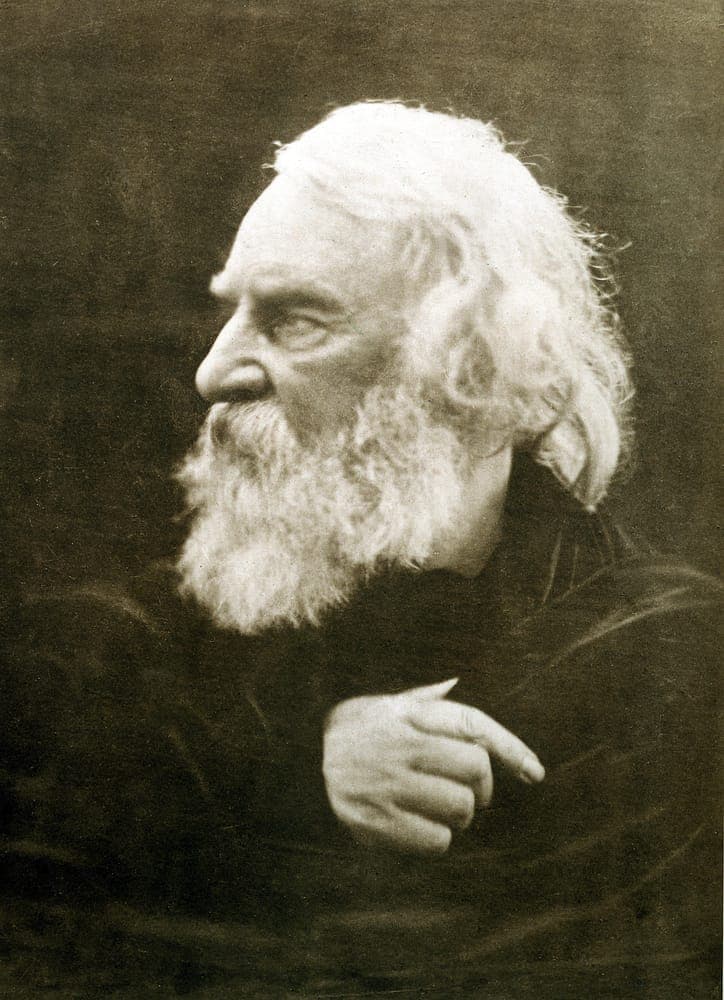
Author
Henry Wadsworth Longfellow
- Lived
- Lived 1807 to 1882
- From
- From American
- Born in
- Born in Portland, Maine
Born on February 27, 1807, in Portland, a seaport in what was then the District of Maine and still part of Massachusetts, Henry Wadsworth Longfellow was the son of Stephen Longfellow, a lawyer, and Zilpah Wadsworth, whose father Peleg had been a general in the Revolutionary War. He saw his first poem printed in the Portland Gazette at thirteen and entered Bowdoin College at fifteen, graduating in 1825 in the same class as Nathaniel Hawthorne. The college offered him a new professorship of modern languages on condition that he first study abroad, and three years in France, Spain, Italy and Germany made him a gifted linguist. In 1831 he married Mary Storer Potter, who died in 1835 after a miscarriage during a second European journey, and the following year he took up the Smith Professorship of Modern Languages at Harvard, lodging at Craigie House in Cambridge, the mansion George Washington had used as his headquarters in 1775. Voices of the Night (1839) made his name, and after a seven-year courtship he married Frances Appleton in 1843; her father bought Craigie House for the couple as a wedding present. The long narrative poems that followed, Evangeline (1847), built on an Acadian story Hawthorne had passed to him, The Song of Hiawatha (1855) and The Courtship of Miles Standish (1858), made him the most popular American poet of his day, and in 1854 he left Harvard to write full time. In July 1861 Fanny's dress caught fire while she was melting wax to seal a packet of her children's hair, and she died of her burns the next day; Longfellow, badly burned trying to save her, grew the white beard that became his likeness. He published Tales of a Wayside Inn (1863), which opens with "Paul Revere's Ride," and turned to translation, completing in 1867 the first full American translation of Dante's Divine Comedy. He died of peritonitis at Craigie House on March 24, 1882, at seventy-five.
In July 1879, eighteen years after the fire, Longfellow came upon a picture of a Western mountain whose ravines hold a cross of snow. That night, under Fanny's portrait, he wrote a sonnet naming it the cross he had worn upon his breast these eighteen years. He never published it; it was found in his portfolio after his death.
The first button needs the app on this device; the second gets it there.
In the canon
- Poems of Henry Wadsworth Longfellow1839
- Hyperion1839
- Evangeline: A Tale of Acadie1847
- Kavanagh1849
- The Golden Legend1851
- The Song of Hiawatha1855
- The Courtship of Miles Standish1858
- Tales of a Wayside Inn1863