
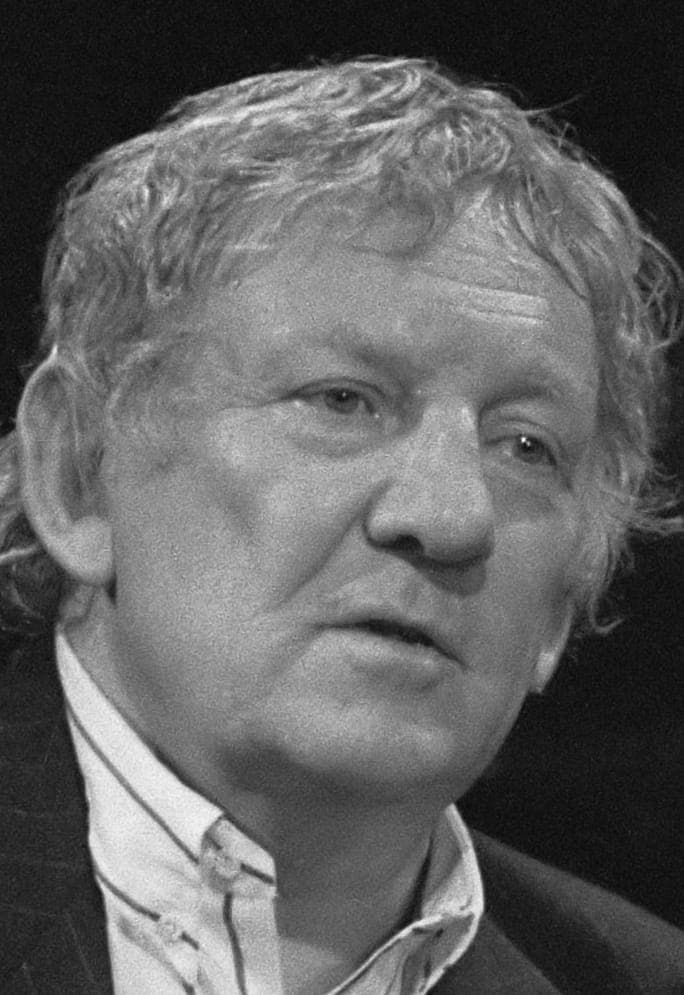
Author
Hugo Claus
- Lived
- Lived 1929 to 2008
- From
- From Belgian
- Born in
- Born in Bruges, Belgium
Born Hugo Maurice Julien Claus on April 5, 1929, at the Sint-Janshospitaal in Bruges, the eldest of four sons of Jozef Claus, a printer with a passion for amateur theatre, and Germaine Vanderlinden, he grew up largely in Catholic boarding schools, beginning at four with the nuns of a pensionnat in Aalbeke. He was eleven when Germany invaded Belgium; many of his teachers were Flemish nationalists, he joined the pro-German youth wing of the Flemish National Union, and his father was briefly detained after the Liberation for collaboration, a childhood he would turn into fiction decades later. At seventeen he left home to live with the painter Antoon De Clerck, his father printed his first poems in 1947, and that autumn he worked as a seasonal labourer in a French sugar factory. His first novel, De Metsiers (1950), won the Leo J. Krynprijs when he was twenty-one. He spent 1950 to 1952 in Paris among the painters of CoBrA, worked with Karel Appel and Corneille, then lived in Italy with the actress Elly Overzier, whom he married in Ghent in 1955. De Oostakkerse gedichten (1955) set the tone for his poetry, and Omtrent Deedee (1963) turned a family's yearly memorial in a village rectory into a day and a half of desire and violence. His nude staging of the Holy Trinity in Masscheroen (1967) brought a conviction for offending public morals. In the 1970s he had a son, Arthur, with Sylvia Kristel. Het verdriet van België (1983), the story of a Flemish boy growing up through the occupation, was voted the Dutch-language book of the twentieth century in a 1999 poll, and in 1986 he received the Prijs der Nederlandse Letteren. Poet, novelist, painter, film director and the author of some thirty-five plays, he was put forward many times for the Nobel Prize. Suffering from Alzheimer's disease, he chose euthanasia and died in Antwerp on March 19, 2008.
In 1948, a few months after a season of labour in a French sugar factory, the young Claus was in a Paris bar when he caught sight of Antonin Artaud sitting there, already a ruined man in the last weeks of his life. Claus took him for his spiritual father, and turned from there to Seneca and the Elizabethan stage.
The first button needs the app on this device; the second gets it there.
In the canon
- The Oostakker Poems1955
- Omtrent Deedee1963
- The Sorrow of Belgium1983