
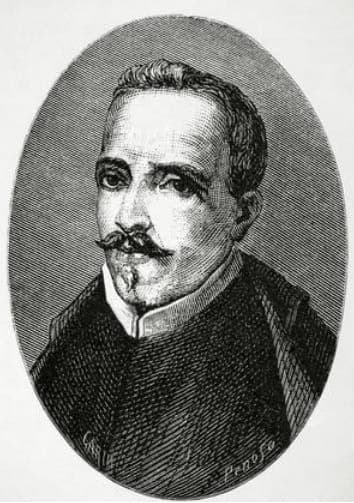
Author
Inca Garcilaso de la Vega
- Lived
- Lived 1539 to 1616
- From
- From Peruvian
- Born in
- Born in Cusco, Peru
Born Gómez Suárez de Figueroa on April 12, 1539, in Cusco, in the first years of the Spanish conquest of Peru, he was the son of the conquistador captain Sebastián Garcilaso de la Vega y Vargas and of Palla Chimpu Ocllo, baptized Isabel Suárez, a granddaughter of the Inca ruler Huayna Capac. His parents never married in the Church, and the boy spent his first ten years among his mother's family, speaking Quechua before Spanish and hearing his relatives remember the empire that had just fallen. Juan de Cuéllar, a canon of the cathedral, taught him grammar, he learned to read the knotted cords called quipus, and at fifteen he was working as secretary to his father, then corregidor of Cusco. His father died in 1559 and left him money to study in Spain, and on January 20, 1560, he set out from Cusco for Lima and the long voyage to Lisbon. He never saw Peru again. He settled at Montilla in Andalusia under the protection of his uncle Alonso de Vargas, petitioned the court in Madrid without success for the rewards owed to his father, and served as a captain against the Morisco revolt in the Alpujarras. Signing himself Garcilaso Inca de la Vega, he made his literary debut in 1590 with a Spanish translation from the Italian of León Hebreo's Dialogues of Love, and moved to Córdoba the following year. La Florida del Inca, his account of Hernando de Soto's expedition into North America, built largely on the recollections of the old soldier Gonzalo Silvestre, appeared in Lisbon in 1605, and the first part of the Royal Commentaries of the Incas followed there in 1609, a history of the Inca world drawn from the stories of his mother's people and the surviving papers of Blas Valera. He died in Córdoba in April 1616, and the second part, on the conquest, was published the next year. After the rising of Túpac Amaru II, the Spanish crown banned the Commentaries in Peru, and copies passed from hand to hand in secret.
On the point of leaving for Spain, the young Garcilaso called on Polo de Ondegardo, the corregidor of Cusco, to say goodbye. Polo took him into a room to see 'some of your own people': the embalmed bodies of three Inca kings and two queens, seated with their arms crossed, still keeping their hair, eyebrows and eyelashes.
The first button needs the app on this device; the second gets it there.
In the canon
- Royal Commentaries of the Incas1609