

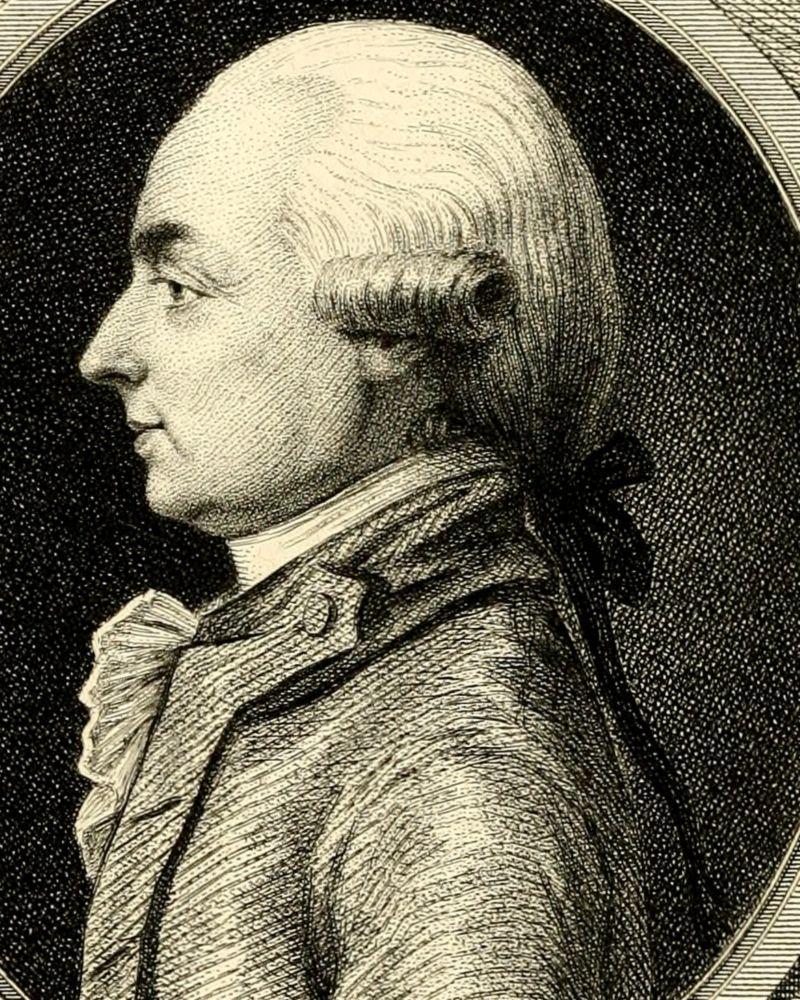
Author
J. Hector St.John de Crèvecoeur
- Lived
- Lived 1735 to 1813
- From
- From French-American
- Born in
- Born in Caen, France
Born Michel-Guillaume Jean de Crèvecoeur on January 31, 1735, in Caen, Normandy, into a family of the minor Norman nobility, he was schooled by the Jesuits at the Collège Royal-Bourbon and sent as a teenager to relatives in England, where he learned the language that would make his name. In 1755 he crossed to New France and served with Montcalm's forces as a surveyor and mapmaker through the Seven Years' War, until a wound at Quebec in 1759 ended his soldiering. That December he sailed for New York, took the name J. Hector St. John, and spent a decade trading, surveying and travelling through the British colonies, becoming a naturalized New Yorker in 1765. In 1769 he married Mehitable Tippet, bought a farm he called Pine Hill in Orange County, and raised three children there. The Revolution, in which he tried to stay neutral and was trusted by neither side, drove him back to Europe, and in London in 1782 he published Letters from an American Farmer, twelve letters in the voice of a farmer named James, among them the third, which asks, "What then is the American, this new man?" The book made him famous across Europe, carried him into the Paris salon of Madame d'Houdetot and the company of Benjamin Franklin, and won him the post of French consul at New York. He landed there in November 1783 to find his wife dead, his farm burned in a raid and his two younger children missing; he found them the next spring, safe with a family in Boston. He rewrote and enlarged the Letters in French in 1784 and 1787, worked for trade and a regular packet-boat service between France and New York, and was elected to the American Philosophical Society in 1789. He left America for good in 1790, gave up the consulship in 1792 as the Revolution in France darkened, and in 1801 published a three-volume Voyage dans la Haute-Pensylvanie et dans l'État de New-York that almost nobody read. He died at Sarcelles, near Paris, on November 12, 1813.
In 1779, bound for France to secure his children's inheritance, Crèvecoeur crossed into British-held New York with his son. The British arrested him as a suspected spy and held him for months without a hearing. When he finally sailed in September 1780, his ship was wrecked off the Irish coast, and he did not reach Normandy until August 1781.
The first button needs the app on this device; the second gets it there.
In the canon
- Letters from an American Farmer1782