

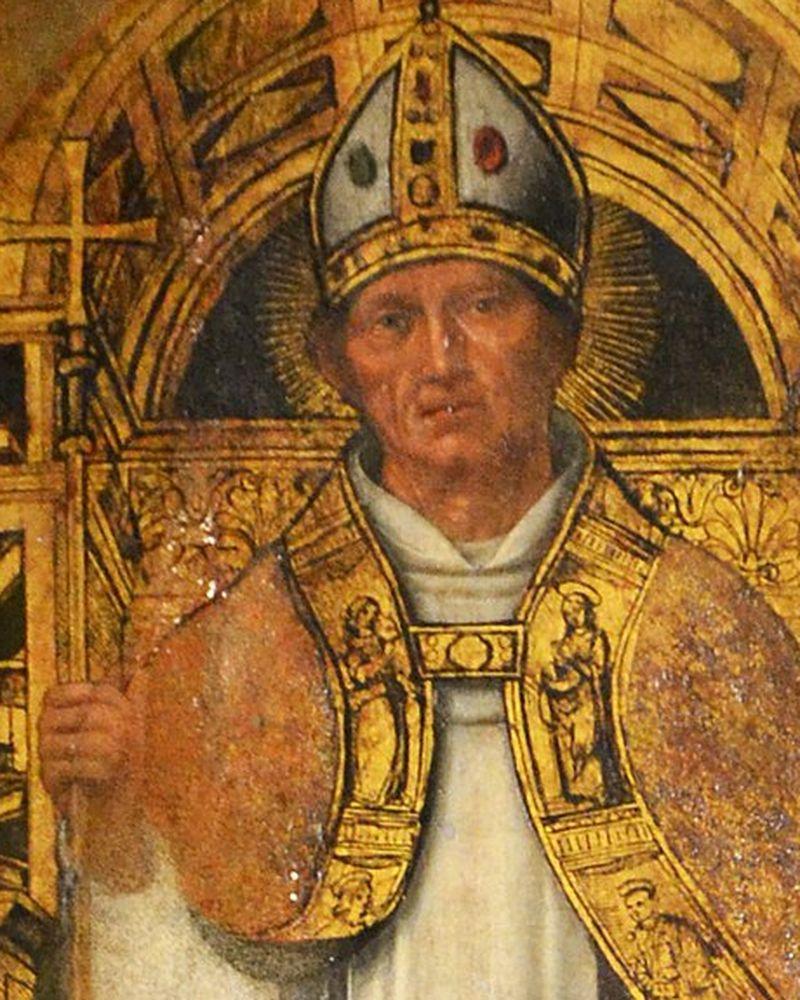
Author
Jacobus de Voragine
- Lived
- Lived 1230 to 1298
- From
- From Italian
- Born in
- Born in Varazze, Italy
Born around 1230 in Varazze, a small town on the Ligurian coast west of Genoa, Jacobus de Voragine took his name from his birthplace, which Latin rendered as Varagine. He entered the Dominican order in 1244, still a boy, and rose through it as a preacher and administrator, serving as prior of the friaries at Como, Bologna and Asti. Around 1260, while still a working friar, he compiled the Legenda aurea, a handbook of saints' lives arranged by the feasts of the Church year, drawing on earlier Dominican digests by Jean de Mailly and Bartholomew of Trent, on Eusebius and Cassiodorus, and on apocryphal gospels. Each chapter opens with a playful, often fanciful etymology of the saint's name before telling the life, the miracles and the death. He meant it as a resource for preachers; it became one of the most widely read books of the later Middle Ages, surviving in more than a thousand manuscripts and translated into French, Catalan, Czech, German, Italian and English. From 1267 to 1286 he governed the Dominican province of Lombardy, and in 1292 Pope Nicholas IV summoned him to Rome to be consecrated archbishop of Genoa. As archbishop he worked to calm the feud between Guelphs and Ghibellines that divided his city, and he wrote a Chronicle of Genoa in twelve parts, begun in 1293 and carried down to 1296 or 1297, along with collections of sermons for Sundays, for saints' days and for Lent, and some 160 discourses on the Virgin Mary. He died in Genoa in July 1298 and was buried in the Dominican church there. Printing made his book more popular still: William Caxton published an English Golden Legend in 1483, and among the earliest printed books it ran to more editions than the Bible itself. Pope Pius VII beatified him in 1816, and he is remembered on 13 July.
In the spring of 1292 Jacobus reached Rome on Palm Sunday, summoned by Pope Nicholas IV to be made archbishop of Genoa. On Good Friday the pope died. With the papacy suddenly empty, the cardinals resolved to go ahead with the consecration anyway on the Sunday after Easter, "for the honour of the commune of Genoa."
The first button needs the app on this device; the second gets it there.
In the canon
- The Golden Legend: Selections1260