

Author
James Weldon Johnson
- Lived
- Lived 1871 to 1938
- From
- From American
- Born in
- Born in Jacksonville, Florida
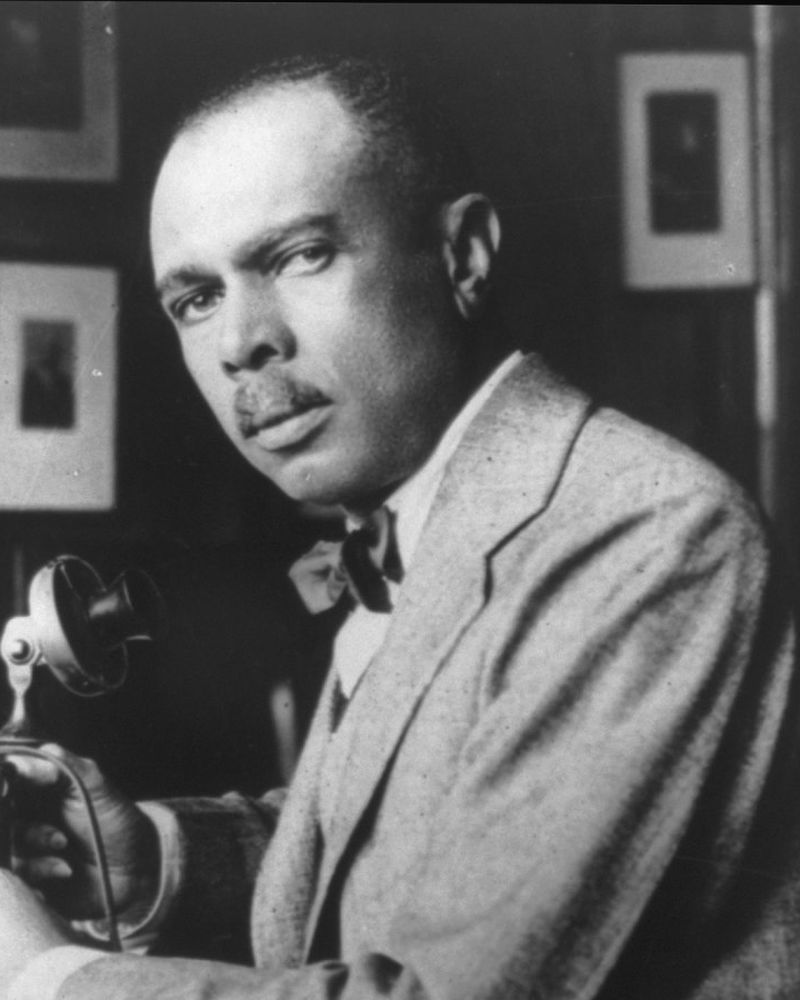
Born on June 17, 1871, in Jacksonville, Florida, James Weldon Johnson was the son of James Johnson, the headwaiter of a resort hotel, and Helen Louise Dillet, a musician of Haitian and Bahamian descent who became the first Black woman to teach in a public school in Florida. He graduated from Atlanta University in 1894 and came home to run the Stanton School, where he had been a pupil, while founding a short-lived daily newspaper and reading law at night; he became the first Black lawyer admitted to the Florida bar by open examination since Reconstruction, though he never practised. For a Lincoln's Birthday celebration at the school in 1900 he wrote the poem "Lift Every Voice and Sing", which his brother J. Rosamond Johnson set to music. In 1902 the brothers moved to New York and, with Bob Cole, wrote some two hundred songs for Broadway and the vaudeville stage. With the backing of Booker T. Washington he entered the consular service in 1906, serving at Puerto Cabello in Venezuela and then at Corinto in Nicaragua, and there he wrote much of The Autobiography of an Ex-Coloured Man, published anonymously in 1912. He married Grace Nail in 1910. In 1916 he joined the National Association for the Advancement of Colored People as a field secretary, and in 1920 he became its first Black executive secretary, leading the long campaign for the Dyer Anti-Lynching Bill and exposing the conduct of the American occupation of Haiti. His anthology The Book of American Negro Poetry (1922) and God's Trombones (1927), seven sermons in verse, made him one of the central figures of the Harlem Renaissance, and Black Manhattan (1930) and the memoir Along This Way (1933) followed. In 1930 he left the NAACP to teach creative literature at Fisk University, and in 1934 he also became the first Black professor at New York University. He died on June 26, 1938, at the age of sixty-seven, when the car carrying him and his wife was struck by a train at a crossing in Wiscasset, Maine.
In 1901, with Jacksonville smouldering after its great fire, Johnson sat on a bench in Riverside Park checking an article with a light-skinned reporter from New York. Militiamen came with rifles and bayonets, certain they had caught a Black man with a white woman, and a crowd tore his clothes. A lieutenant arrested him, and the arrest saved his life.
The first button needs the app on this device; the second gets it there.
In the canon
- The Autobiography of an Ex-Coloured Man1912
- God's Trombones1927
- Along This Way1933