

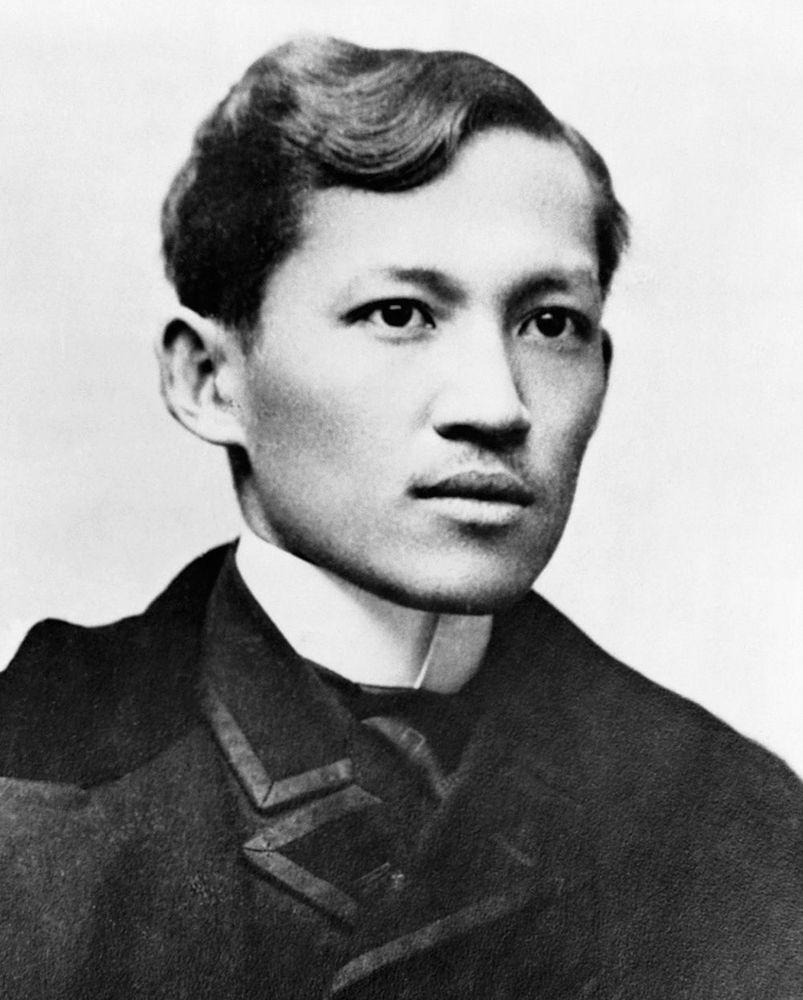
Author
José Rizal
- Lived
- Lived 1861 to 1896
- From
- From Filipino
- Born in
- Born in Calamba, Philippines
Born José Protasio Rizal Mercado y Alonso Realonda on 19 June 1861 in Calamba, Laguna, on the shore of Laguna de Bay, he was the seventh of eleven children of Francisco Mercado and Teodora Alonso, who leased farmland from the Dominican friars who owned the town. His mother taught him to read, and his older brother Paciano, who had lived with the reformist priest José Burgos, carried home the lesson of 1872, when Burgos and two fellow priests were garrotted in Manila after a mutiny they had nothing to do with. Rizal took his bachelor's degree at the Ateneo Municipal in 1877, studied medicine at the University of Santo Tomas, and in May 1882 sailed for Spain without telling his parents. He qualified in medicine at the Universidad Central in Madrid, trained as an eye surgeon in Paris and Heidelberg, and in March 1887 published Noli Me Tangere in Berlin, a novel of a young heir's return to a colony run by friars and petty officials. It was banned in the Philippines and read there in secret. He went home in August 1887, was pressed to leave within months, and in London copied out Antonio de Morga's 1609 history of the islands to reissue it with his own notes. The novel's darker, angrier sequel, El Filibusterismo, came off a press in Ghent in 1891, dedicated to the three priests of 1872. Back in Manila in 1892 he founded La Liga Filipina, a civic league for reform by lawful means, and within days was arrested and exiled to Dapitan, on Mindanao, where for four years he ran a school and a clinic, built a waterworks, collected specimens for European museums and lived with Josephine Bracken. In 1896 he volunteered as an army doctor for Cuba; while he waited in Manila Bay for a ship the Katipunan rose in revolt, and on reaching Spain he was arrested in Barcelona, shipped back, court-martialled for rebellion, and shot at Bagumbayan, Manila, on 30 December 1896, aged thirty-five, leaving behind a farewell poem later known as Mi último adiós.
On the eve of his execution his mother and sisters were let in to see him, but kept several feet away from him. He told his sister Trinidad he had nothing to leave her except the little alcohol cooking lamp from his cell, then added quickly, in English so the guard would not follow: 'There is something inside.'
The first button needs the app on this device; the second gets it there.
In the canon
- Noli Me Tangere1887
- El Filibusterismo1891