

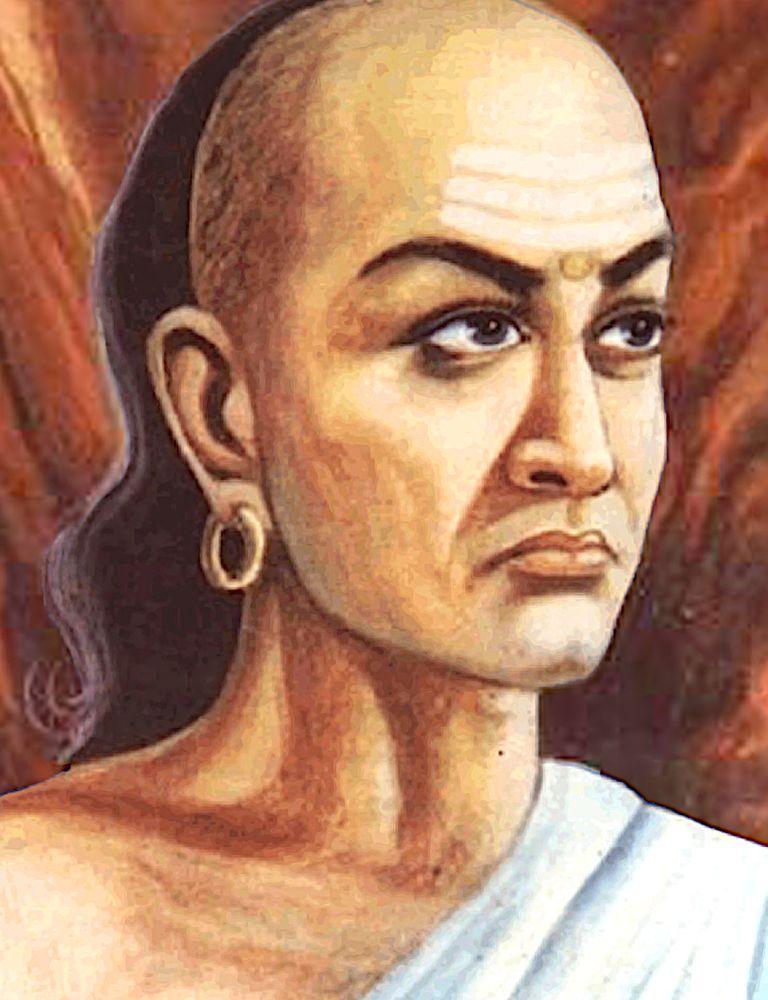
Author
Kautilya
- From
- From Indian
Kautilya is the name the Arthashastra gives its author, and almost everything else about him is contested, including his dates and even who he was. Indian tradition identifies him with Chanakya, also called Vishnugupta, the Brahmin teacher said to have helped the young Chandragupta Maurya overthrow the Nanda kings of Magadha around 321 BCE and found the Maurya empire, then served him as chief minister at Pataliputra. The stories are many and late. Buddhist chronicles of the fifth or sixth century CE make him a Brahmin of Taxila, ugly and broken-toothed, thrown out of King Dhana Nanda's alms hall; a Jain tradition places his birth in a village called Chanaka; the Sanskrit play Mudrarakshasa, written centuries after the events it stages, makes him the cool strategist who outwits the Nanda minister Rakshasa. Some accounts have him serve Chandragupta's son Bindusara as well, and the Jain telling ends with him fasting to death in old age. The book is firmer ground than the man. The Arthashastra, a treatise on the science of wealth and power in fifteen books and one hundred and fifty chapters, covers the training of a king, the treasury, taxation, law, espionage, diplomacy and war, and its closing verse names Vishnugupta as the one who wrote it. Lost to the wider world for centuries, it was identified in 1905 by R. Shamasastry, librarian of the Oriental Library in Mysore, among palm-leaf manuscripts; he published the Sanskrit in 1909 and an English translation in 1915. Modern scholarship has since pulled the threads apart. Thomas Trautmann's statistical study of its vocabulary in 1971 found several hands, and Patrick Olivelle dates the text as we have it to layers compiled between about 150 BCE and 300 CE, noting that the name Chanakya never appears in it. Whether one minister of Chandragupta wrote its core or the name gathered a school's work across centuries, the voice that reaches the reader is single, patient and unillusioned, concerned above all with how a state survives.
In the Buddhist telling, Chanakya came to King Dhana Nanda's alms-giving for Brahmins and sat in the seat of honour. The king, repelled by his broken teeth and crooked feet, had him thrown out. Chanakya broke his sacred thread, cursed the king, and escaped disguised as a wandering ascetic, to find the boy who would end the dynasty.
The first button needs the app on this device; the second gets it there.
In the canon
- The Arthashastra300 BCE