
Author
Leopold Von Sacher-Masoch
- Lived
- Lived 1836 to 1895
- From
- From Austrian
- Born in
- Born in Lemberg, Austrian Empire
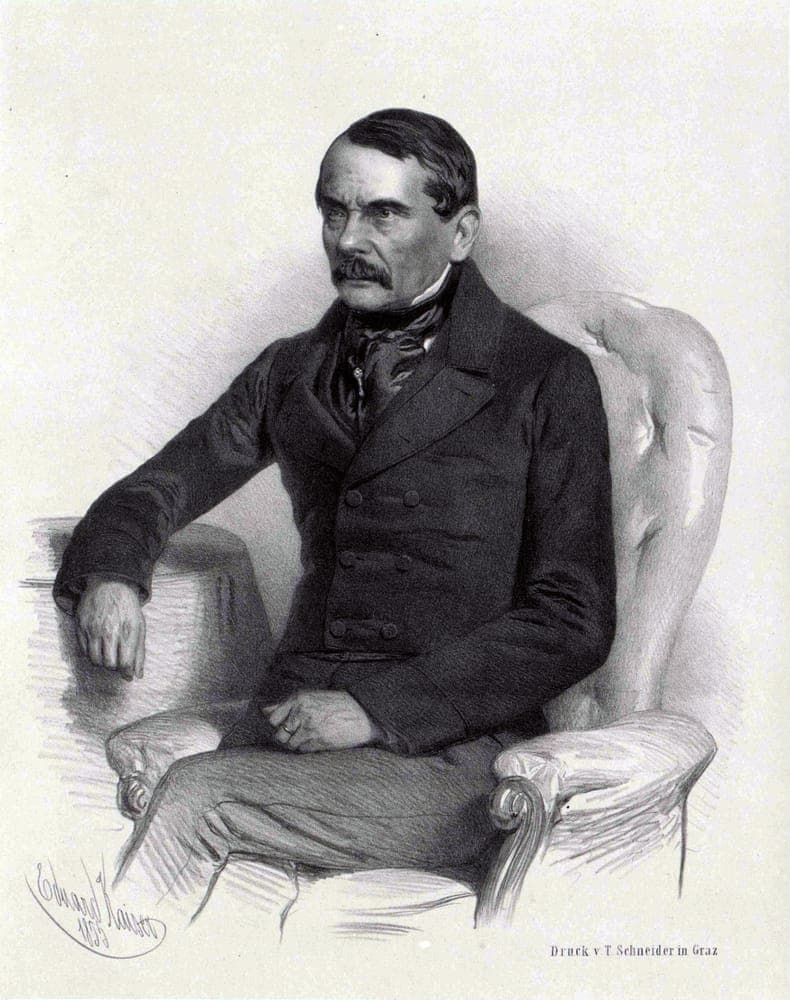
Born on 27 January 1836 in Lemberg, the capital of Austrian Galicia and now Lviv in Ukraine, Leopold von Sacher-Masoch was the son of the city's chief of police, Leopold Johann Nepomuk Ritter von Sacher, and of a Galician noblewoman whose family name, Masoch, was joined to his father's by imperial permission in 1838 because she was the last of her line. He was nursed by a Ruthenian servant, Handzia, whose songs and folk tales gave him the Slavic countryside he would write about for the rest of his life. After the family moved to Prague in 1848 he studied law, mathematics and history at Graz, took his doctorate in 1856, habilitated in 1857 with a study of the revolt of Ghent under Charles V, and lectured in history before giving up the university for literature. Eine galizische Geschichte (1858) was his first book; the novella Don Juan von Kolomea (1866) carried his name across Europe, and critics called him the Galician Turgenev. He planned a six-volume cycle, Das Vermächtnis Kains, and finished two; the first of them, Die Liebe (1870), contained Venus im Pelz. He had signed a contract of submission with the writer Fanny Pistor on 8 December 1869, and in 1873 he married Aurora von Rümelin, who took the name of his novel's heroine. From 1881 to 1885 he edited the Leipzig review Auf der Höhe, arguing in it for Jewish emancipation and the education of women, and in 1883 France made him a chevalier of the Legion of Honour. In 1886 Richard von Krafft-Ebing coined masochism from his surname, a use he rejected and could not stop. He moved that same year to Lindheim in Hesse with his translator Hulda Meister, married her in 1890, founded an adult education society there in 1893 to counter the antisemitism spreading through the district, and died at Lindheim on 9 March 1895, aged fifty-nine.
On 8 December 1869 he signed a contract making himself Fanny Pistor's slave for six months, on condition she wear furs when cruel and leave him six hours a day to write. They travelled to Italy as mistress and servant, she in first class, he in third, calling himself Gregor.
The first button needs the app on this device; the second gets it there.
In the canon
- Venus in Furs1870